Does your home ever feel like the clutter is winning? You are not alone — and the problem is rarely laziness. Most disorganized homes simply lack systems: a place for everything and a habit that keeps it there. The good news is that you do not need expensive organizers or a full weekend to turn things around. These simple home organization ideas focus on small, practical systems that work with real life, so your home stays tidy long after the initial burst of motivation fades.
Declutter Before You Organize
Buying bins before decluttering is the most common organizing mistake — you end up neatly storing things you do not need. Start with the proven four-box method: grab four boxes or bags and work through one drawer, shelf, or corner at a time, putting every single item into a box — no “maybe” piles. Be honest about duplicates: you do not need four wooden spoons or three half-used notebooks. When a box is full, deal with it immediately — donations go straight to the car, trash goes out. Only what remains in Keep gets organized.
- Keep: you use it regularly and it earns its space.
- Donate: usable, but someone else needs it more.
- Trash: broken, expired, or truly worn out.
- Relocate: keepers that live in the wrong room.
Create a Landing Zone by the Door
The entryway is where clutter is born: keys, mail, bags, and shoes pile up the moment you walk in. A simple landing zone stops it cold. Mount a few sturdy hooks at reachable height for coats and bags, place a small tray or bowl for keys and sunglasses, and set a basket or wall file for incoming mail. Add a shoe tray or compact rack so footwear never migrates into the living room. The rule is simple: everything gets dropped in its spot within 30 seconds of walking in. Because this zone is the first thing you see when you come home, keeping it clear sets a calm tone for the whole house.
Zone Your Kitchen Like a Pro
Kitchens work best when items live near where they are used. Create a coffee or tea station with the maker, mugs, and supplies in one cabinet; keep cooking utensils, oils, and spices within arm’s reach of the stove; and store everyday dishes near the dishwasher so unloading is a one-step job. In the pantry, decant dry goods like rice, pasta, and flour into clear, airtight containers — you will instantly see what you have, food stays fresher, and the shelves look calmer. A lazy Susan in a deep corner cabinet ends the era of lost cans, and shelf risers double the usable space for mugs and bowls.
Tame the Closet With Simple Systems
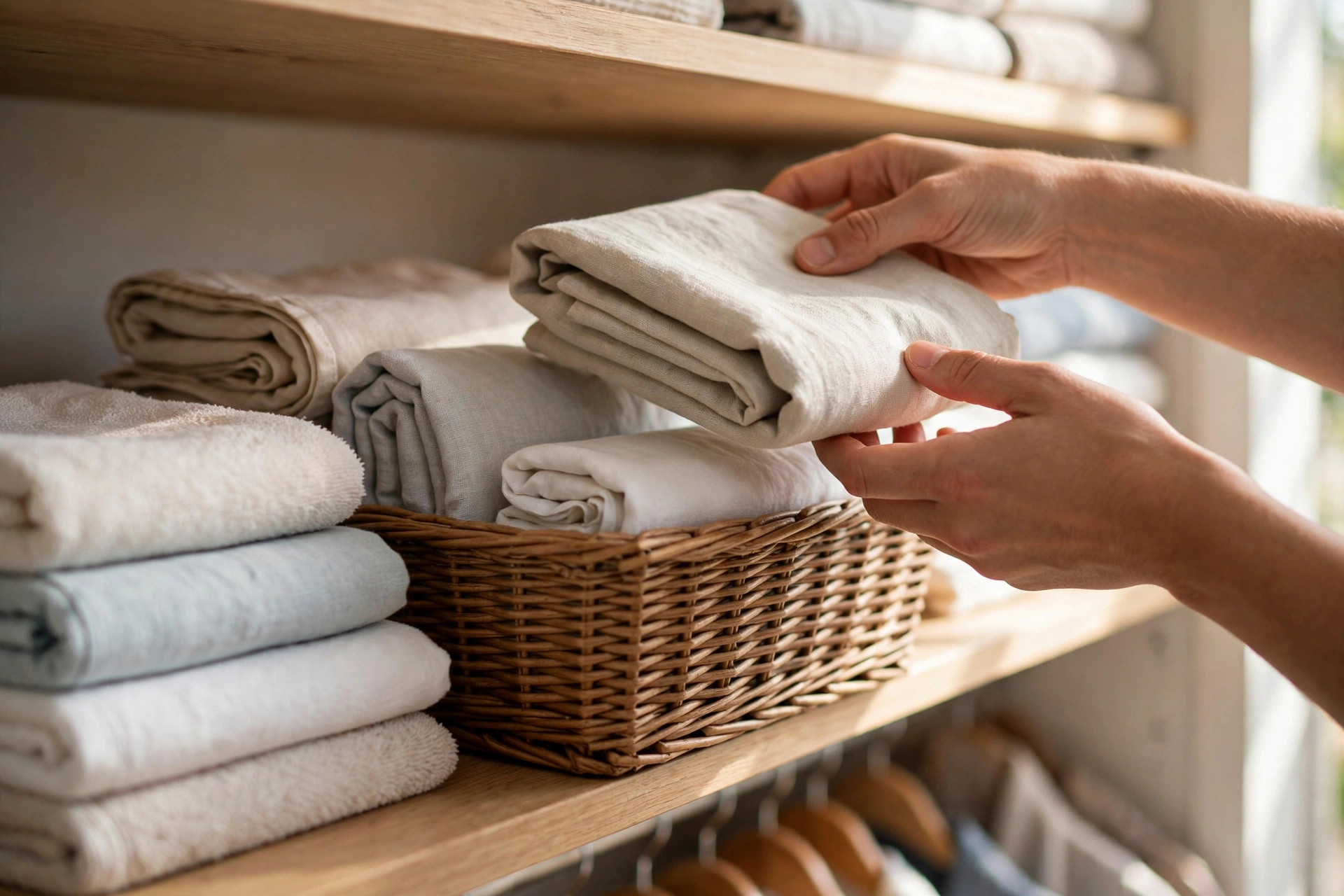
Closets explode when there is no system for what goes where. Start by switching to slim, matching hangers — they instantly create visual calm and free up surprising rod space. Use shelf dividers or small bins to keep folded stacks (jeans, sweaters) from toppling, and store out-of-season clothes in labeled bins on the highest shelf. Adopt the one-in, one-out rule: every new item means an old one gets donated. Do a five-minute seasonal review — if you did not wear it this season, it is a donation candidate. A tidy closet even makes mornings easier, because you can actually see your options.
Contain Paper Clutter for Good
Paper is the stealthiest clutter because it arrives daily. Set up a single inbox tray by the door for all incoming mail and papers — one place, no exceptions. Once a week, spend ten minutes sorting it: act on what needs action, file what must be kept (a simple accordion file with a few labeled sections is enough), and recycle or shred the rest. Switch bills and statements to paperless wherever possible to stop the flow at the source. For sentimental papers like kids’ artwork, keep one memory box per person and photograph the rest before letting go.
Use Vertical Space Everywhere
When floor and shelf space run out, look up. Walls and doors offer organization real estate most homes waste. Install a few floating shelves in the bathroom for toiletries, hang a pegboard in a craft corner or garage for tools, and use over-the-door organizers in bedrooms and pantries for shoes, snacks, or cleaning supplies. In the kitchen, a magnetic strip on the wall frees a whole drawer from knives, and adhesive hooks inside cabinet doors corral measuring cups and lids. Vertical storage keeps daily items visible and reachable while floors stay clear.
Build a 10-Minute Daily Reset Habit
Systems only work if they are maintained, and maintenance should be tiny. Each evening, set a timer for ten minutes and do a whole-house reset: fluff cushions, return stray items to their zones, start the dishwasher, and wipe the kitchen counters. Get everyone in the household involved — even young kids can do a five-minute toy pickup race. Keep a short reset checklist on the fridge until it becomes automatic. This one habit is the difference between a home that stays organized and one that slides back into chaos within a week.
Frequently Asked Questions
Where should I start organizing a messy house?
Start small and visible: one drawer, one shelf, or the entryway. A quick, visible win builds momentum far better than tearing apart the garage on day one. Finish one zone completely — declutter, assign homes, label — before moving to the next. Most people find that early success makes them eager to continue.
How do I keep my home organized long-term?
Two habits do 90 percent of the work: the 10-minute daily reset and the one-in, one-out rule for new purchases. Also, make sure every item has a labeled home — clutter returns fastest when things have no designated spot. A quick monthly 15-minute check of one zone catches drift before it spreads.
What storage containers are actually worth buying?
Clear, stackable containers in uniform sizes — you can see contents and they nest neatly. Measure your shelves before buying anything, and start with just a few; you can always add more. Skip novelty organizers until you know exactly what problem you are solving, or they become clutter themselves.
How do I organize with kids in the house?
Lower the bar — literally. Use open bins at kid height with picture labels so little ones can tidy independently. Keep a “donation box” in each closet and toss outgrown items in as you notice them. And embrace closed storage: baskets with lids hide a multitude of sins while looking tidy.
The bottom line: an organized home is not a perfect home — it is a home with systems. Declutter first, give everything a home, use your walls, and protect it all with a 10-minute daily reset. Start with just one zone this weekend, and enjoy the calm that follows you into the next room.