The kitchen is the hardest-working room in your home. It handles three meals a day, hurried breakfasts, late-night snacks, and everything in between — so it is no surprise that it also collects the most grease, crumbs, and clutter. The good news is that keeping it clean does not require hours of scrubbing or expensive products. With a simple routine and a few smart techniques, you can keep your kitchen fresh, hygienic, and inviting every single day. These easy kitchen cleaning tips break the job into small, manageable steps that fit into even the busiest schedule.
Start With a Clear-Counter Strategy
Cluttered counters make a kitchen look dirty even when it is not. Start every cleaning session by clearing everything off the counters and putting each item where it belongs. Once the surfaces are bare, wipe them down with a cloth dampened in hot, soapy water, working from one end to the other so you do not miss spots. For sticky spots, lay a warm damp cloth over the area for a minute to loosen the residue before wiping. Make this a daily habit: a two-minute evening wipe-down prevents the slow buildup that turns into a weekend-long chore. Tip: keep a dedicated microfiber cloth under the sink just for counters so one is always within reach.
Degrease Your Stovetop the Easy Way
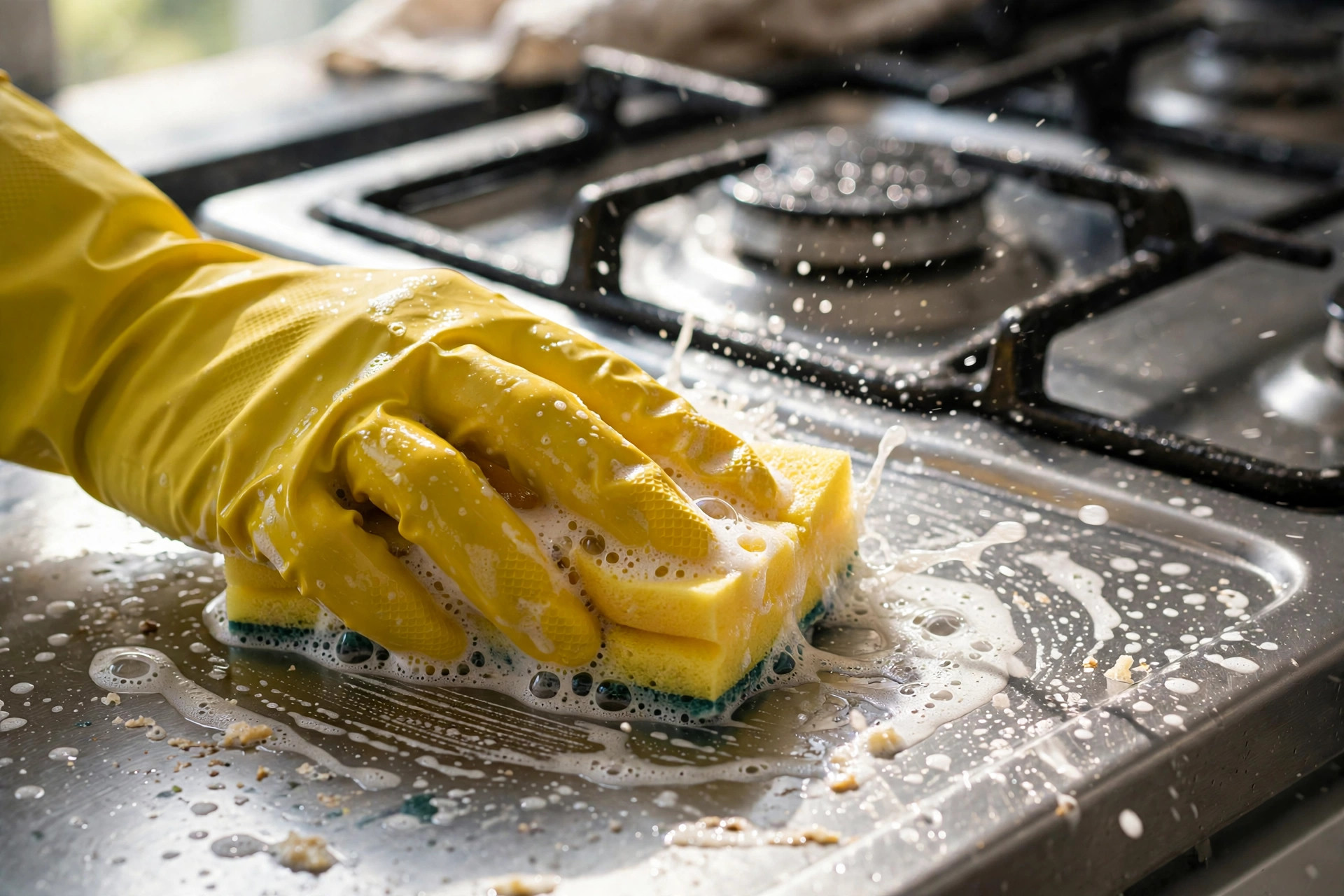
Cooking splatters turn into stubborn grease if left alone, but harsh chemicals are not necessary. Make a simple paste of baking soda and a little water, spread it over the cooled stovetop, and lay a warm, damp towel on top for 15 minutes. The gentle abrasion of the baking soda combined with the heat and moisture lifts grease without scratching. Wipe everything away with a clean damp cloth, then buff dry for a streak-free finish. For gas stove grates, soak them in the sink with hot water and a squirt of dish soap while you clean the rest of the kitchen, then scrub with a brush and rinse. If your stove has a glass top, use a plastic scraper held at a low angle for burnt-on spots instead of anything metal.
Steam-Clean the Microwave Without Scrubbing
Skip the elbow grease and let steam do the work. Fill a microwave-safe bowl with one cup of water and add two tablespoons of white vinegar or a few slices of lemon. Microwave on high for five minutes, then — this is the important part — leave the door closed for another two minutes so the steam keeps loosening the grime. Open the door, remove the bowl carefully (it will be hot), and wipe the interior with a damp cloth or sponge. Dried-on splatters should slide right off. Finish by washing the turntable plate in the sink with dish soap. Doing this once a week keeps odors away and means you never have to chisel at old food again.
Make Your Sink and Faucet Shine
The sink sees everything, so give it a proper clean at least twice a week. Sprinkle baking soda over the basin, scrub with a sponge, then rinse with hot water. For stainless steel sinks, follow with a wipe-down using a cloth dampened with white vinegar to restore shine and cut water spots — just avoid vinegar on natural stone sinks, which it can etch. Polish the faucet with a dry microfiber cloth to remove fingerprints and water marks. To freshen a garbage disposal, toss in a handful of ice cubes and a few lemon peels, then run it with cold water for 30 seconds; the ice knocks debris off the blades while the lemon deodorizes.
Tackle the Fridge One Shelf at a Time
A full fridge clean-out feels overwhelming, so break it into zones. Once a week, do a quick sweep: toss expired items, wilted produce, and mystery leftovers. Once a month, go deeper — remove everything from one shelf or drawer at a time, wipe the surface with warm soapy water, dry it, and put items back, checking dates as you go. Place an open box of baking soda on a back shelf to absorb odors, replacing it every three months. Wipe the door handles and the exterior weekly, since they collect fingerprints fast. A simple rule helps: when you unpack groceries, move older items to the front so they get used first.
Freshen Cutting Boards and Small Appliances
Cutting boards absorb odors and stains, but they are easy to refresh. For wooden boards, rub the surface with half a lemon dipped in coarse salt, let it sit for five minutes, then rinse and stand the board upright to dry completely — never soak wood, or it can warp and crack. Plastic boards can go in the dishwasher.
Monthly appliance refresh checklist
- Empty and wipe the toaster crumb tray to prevent burnt smells.
- Descale the coffee maker with equal parts water and white vinegar, then two plain-water cycles.
- Wipe down the exteriors of the kettle, blender, and mixer with a damp cloth.
Finish With Floors and Trash
Always clean floors last so you catch everything that fell during the rest of your routine. Sweep or vacuum first — a vacuum with a hard-floor setting is fastest — getting under the edges of cabinets and appliances where crumbs hide. Then mop with a well-wrung mop and a mild floor cleaner; too much water can damage wood and laminate. While the floor dries, take out the trash, rinse the bin with hot soapy water if it smells, and put in a fresh liner with a sprinkle of baking soda at the bottom. Step back and enjoy: a kitchen that smells fresh and looks clear is its own reward.
Frequently Asked Questions
How often should I deep-clean my kitchen?
Daily habits matter most: wipe counters and the stovetop every evening, and sweep high-traffic spots. Once a week, clean the sink, microwave, and trash bin. Save the bigger jobs — the fridge interior, oven, cabinet fronts, and a full floor mop — for a monthly session. This layered routine means no single cleaning day ever feels overwhelming.
What is the best homemade degreaser?
A paste of baking soda and water handles most stovetop grease, while a spray of equal parts white vinegar and water cuts through light grease on counters and backsplashes. For heavy buildup, apply the baking soda paste, cover with a warm damp cloth for 15 minutes, then wipe. Avoid vinegar on natural stone, cast iron, and waxed wood.
How do I get rid of lingering cooking smells?
Simmer a pot of water with lemon slices, rosemary, or a splash of vanilla for 20 minutes to freshen the air naturally. Keep the range hood filter clean — a greasy filter recirculates odors. An open box of baking soda in the fridge and a regularly wiped-down trash bin also eliminate the most common hidden sources of kitchen smells.
Can I use vinegar on all kitchen surfaces?
No. Vinegar is excellent on glass, stainless steel, and ceramic, but its acidity can etch natural stone like marble and granite, dull cast iron seasoning, and damage hardwood finishes. When in doubt, use plain dish soap and warm water — it is safe on virtually everything and surprisingly effective.
The bottom line: a clean kitchen is not about marathon cleaning sessions — it is about small, consistent habits. Clear the counters nightly, degrease before buildup hardens, and let steam and soaking do the hard work for you. Pick two or three of these tips to start this week, and you will be amazed how much fresher your kitchen feels with barely any extra effort.