The bathroom is the one room guests always notice and the one we most dread cleaning. Between soap scum, water spots, and humidity-loving mildew, it can feel like a losing battle. But with the right order of operations and a few clever tricks, you can get a sparkling bathroom in about 30 minutes — no harsh fumes required. This simple bathroom cleaning guide walks you through every surface step by step, plus easy habits that keep it cleaner between deep cleans.
Gather Your Supplies First
Professional cleaners never run back and forth for supplies, and neither should you. Load everything into a portable caddy or bucket before you start:
- All-purpose cleaner and a dedicated bathroom disinfectant
- Glass cleaner (or a spray bottle of equal parts water and white vinegar)
- Baking soda, white vinegar, and hydrogen peroxide for tough spots
- Toilet brush, a stiff scrub brush, and an old toothbrush for grout
- Several microfiber cloths, rubber gloves, and a squeegee
Having it all in one place turns cleaning into a smooth assembly line instead of a scavenger hunt.
Work Top to Bottom, Dry to Wet
The golden rule of bathroom cleaning is simple: start high and finish low, and do dry tasks before wet ones. Remove everything from shelves and the tub edge, then dust light fixtures, vents, and shelves with a dry cloth — dust falls downward, so you want it landing on surfaces you have not cleaned yet. Next, apply your cleaners and let them dwell: squirt toilet bowl cleaner under the rim, spray the shower and tub, and mist the sink. While the products soak and loosen grime for 10 minutes, you can wipe mirrors and empty the trash. Why dwell time matters: most cleaners need several minutes of contact to dissolve soap scum and kill germs — spraying and immediately wiping just wastes product.
Conquer the Toilet Step by Step
Start with the bowl cleaner you applied earlier. Scrub under the rim and around the waterline with the toilet brush, then flush. While the bowl soaks, clean the exterior from top to bottom so drips fall onto dirty areas: spray disinfectant on the handle, tank lid, and tank, then the seat (top and underside), then the base and the floor around it. Use a fresh cloth or paper towels for the exterior — never the same cloth you use on sinks. Let the disinfectant sit for the time listed on the label, usually a few minutes, before wiping. Finish by closing the lid; it just looks tidier and keeps the brush caddy out of sight.
Scrub the Shower and Tub
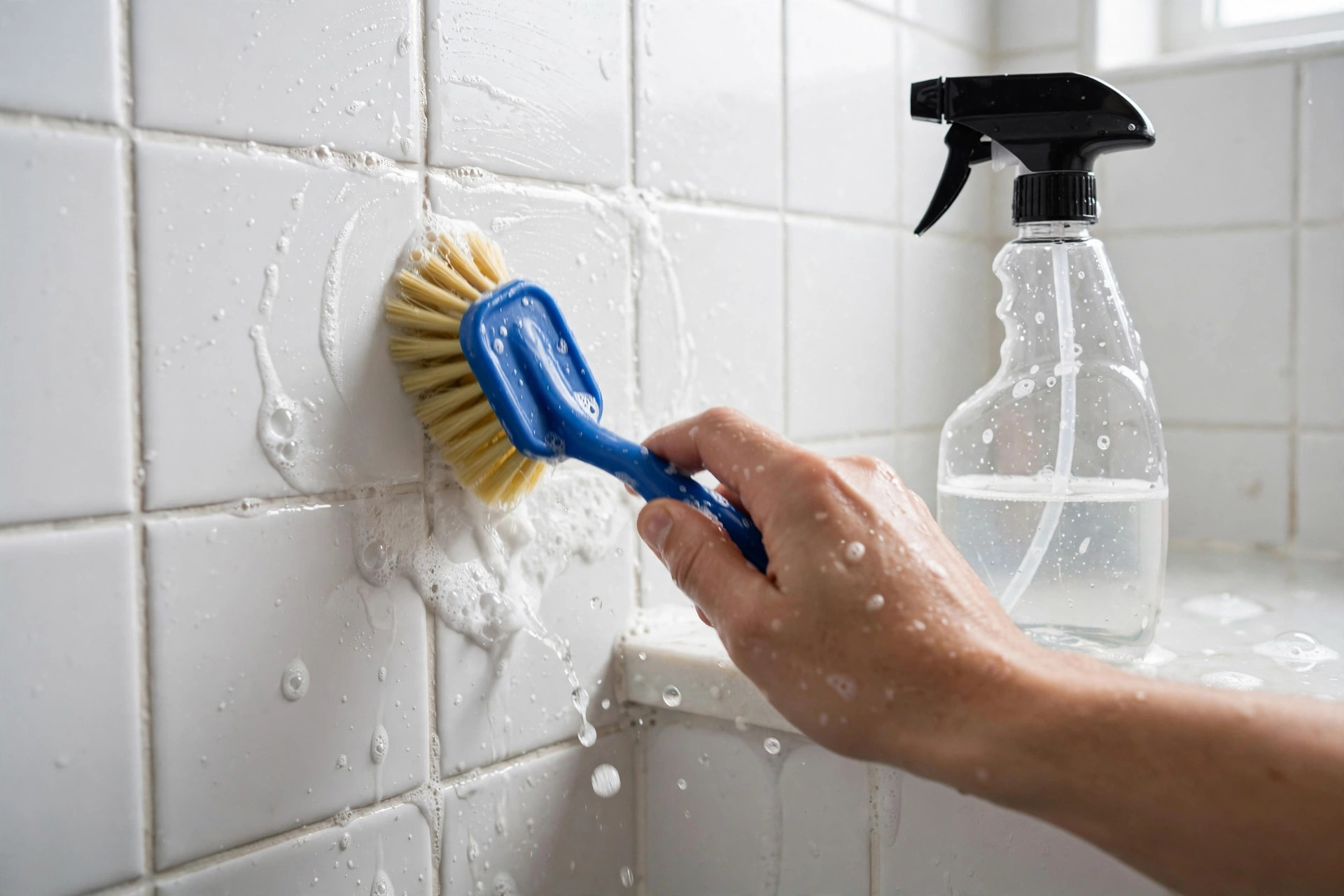
By now your shower spray has had plenty of dwell time. Scrub the walls from top to bottom with your brush, paying extra attention to corners and the caulk lines where mildew loves to hide. For the tub floor, sprinkle baking soda first for gentle abrasion, then scrub and rinse everything with hot water — a handheld showerhead makes rinsing fast, or use a large cup. For a grimy showerhead, fill a plastic bag with white vinegar, tie it over the head so it soaks, and leave it for an hour before running the water. Keep it clean longer: run the squeegee over the walls after each shower. It takes 30 seconds and dramatically slows soap-scum buildup.
Shine the Sink and Mirror
Spray the sink basin and faucet with all-purpose cleaner, scrub with a sponge, and rinse. Polish chrome fixtures with a dry microfiber cloth for a streak-free shine. For the mirror, mist lightly with glass cleaner — less is more, since over-spraying causes drips — and wipe from top to bottom in a zigzag pattern so you can see any spots you missed. Clear off the counter, wipe it down, and put back only the daily essentials; a decluttered counter instantly makes the whole bathroom feel cleaner.
Brighten Grout and Tile
Dingy grout can make an otherwise clean bathroom look tired. Make a paste of baking soda and water, spread it along grout lines, and scrub with an old toothbrush. For stubborn discoloration, spray hydrogen peroxide over the paste, wait 10 minutes, then scrub and rinse. Avoid bleach on colored grout, which it can fade. The best long-term defense is ventilation: run the exhaust fan during showers and for 20 minutes after, and leave the shower door or curtain open so moisture evaporates. If your grout has not been sealed in over a year, consider resealing it — water will bead instead of soaking in.
Mop the Floor Last
Floors come last so they catch everything dislodged above. Start by sweeping or vacuuming — bathrooms collect surprising amounts of hair and dust, especially behind the toilet and under cabinets. Then mop with hot water and a disinfectant cleaner, wringing the mop well. Pay attention to the grout lines and the baseboards, wiping the baseboards with a damp cloth if they look dusty. Shake out or launder the bath mat (most are machine washable) and hang fresh towels. Walk out, close the door, and come back in five minutes — the fresh, clean smell is the best part.
Frequently Asked Questions
How do I prevent mold in the shower?
Moisture control is everything. Run the exhaust fan during every shower and for at least 20 minutes afterward, squeegee the walls, and leave the curtain or door open so air circulates. Wash the shower curtain liner monthly — most can go in the washing machine — and replace it if mildew will not come out.
What removes hard water stains?
Soak a cloth in white vinegar and lay it over the stained area for 30 minutes, then scrub and rinse. For toilet bowls, pour a cup of vinegar in, wait an hour, and brush. Avoid vinegar on natural stone tile, which it can etch — use a stone-safe cleaner there instead.
How often should I clean the bathroom?
Do a full clean weekly: toilet, shower, sink, mirror, and floors. In between, a two-minute daily wipe of the sink and faucet plus a squeegee pass in the shower keeps everything fresh. Toilets in busy households benefit from a midweek bowl swish with the brush.
Is bleach necessary for a clean bathroom?
Usually not. A quality disinfectant cleaner plus hydrogen peroxide for grout handles nearly everything, with far less harsh fumes. Save bleach for rare heavy-duty disinfection, always dilute it, ventilate well, and never mix it with vinegar or ammonia-based products.
The bottom line: a sparkling bathroom is about sequence, not strength. Gather your supplies, let cleaners dwell while you work elsewhere, move top to bottom, and finish with the floor. Add the two-minute daily habits — squeegee, sink wipe, fan on — and your weekly deep clean will get faster every time.