Think a small balcony, patio, or yard cannot be special? Think again. Some of the most charming outdoor spaces in the world are tiny — because small forces you to be intentional, and intentional is what makes a space feel magical. A compact outdoor area is also easier and cheaper to transform than a sprawling yard. Whether you have a 40-square-foot balcony or a pocket-sized patio, these small outdoor space ideas will help you turn it into a favorite retreat.
Think Vertical to Multiply Your Space
When square footage is scarce, the walls are your best friend. A trellis against one wall instantly creates a living green backdrop for climbing plants like jasmine, clematis, or morning glories — all fragrance and color with zero floor space used. Hang wall-mounted planters or a pocket herb garden near the kitchen door for cooking within arm’s reach. Tiered plant stands and railing-mounted boxes add layers of greenery without crowding the floor, and hanging baskets draw the eye upward, making the whole space feel larger. Design trick: keep vertical elements to one or two walls so the space feels lush, not closed in.
Choose Furniture That Folds and Stacks
Bulky furniture eats small spaces alive, so choose pieces that earn their footprint. A classic bistro set — one small round table and two chairs — seats two comfortably and tucks into a corner. Even better, a wall-mounted drop-leaf table folds flat when not in use, instantly freeing the floor. Look for stackable chairs or a storage bench that doubles as seating and hides cushions, tools, or toys inside. Before buying, tape out the furniture footprint on the floor with painter’s tape; if you cannot walk comfortably around it, it is too big. In tiny spaces, every inch should work twice.
Layer Lighting for Evening Magic
The right lighting transforms a small space from ordinary to enchanting after sunset — and it is one of the cheapest upgrades you can make. Drape warm-white string lights overhead or along a railing for instant atmosphere; solar-powered options mean no outlets or wiring. Add a few lanterns or LED candles at different heights — on the table, on the floor, on a shelf — to create depth and glow. A small solar spotlight aimed up into a favorite plant turns it into a living sculpture at night. Stick to warm tones (not harsh white) for that cozy, linger-longer feeling.
Go Big With Container Gardens
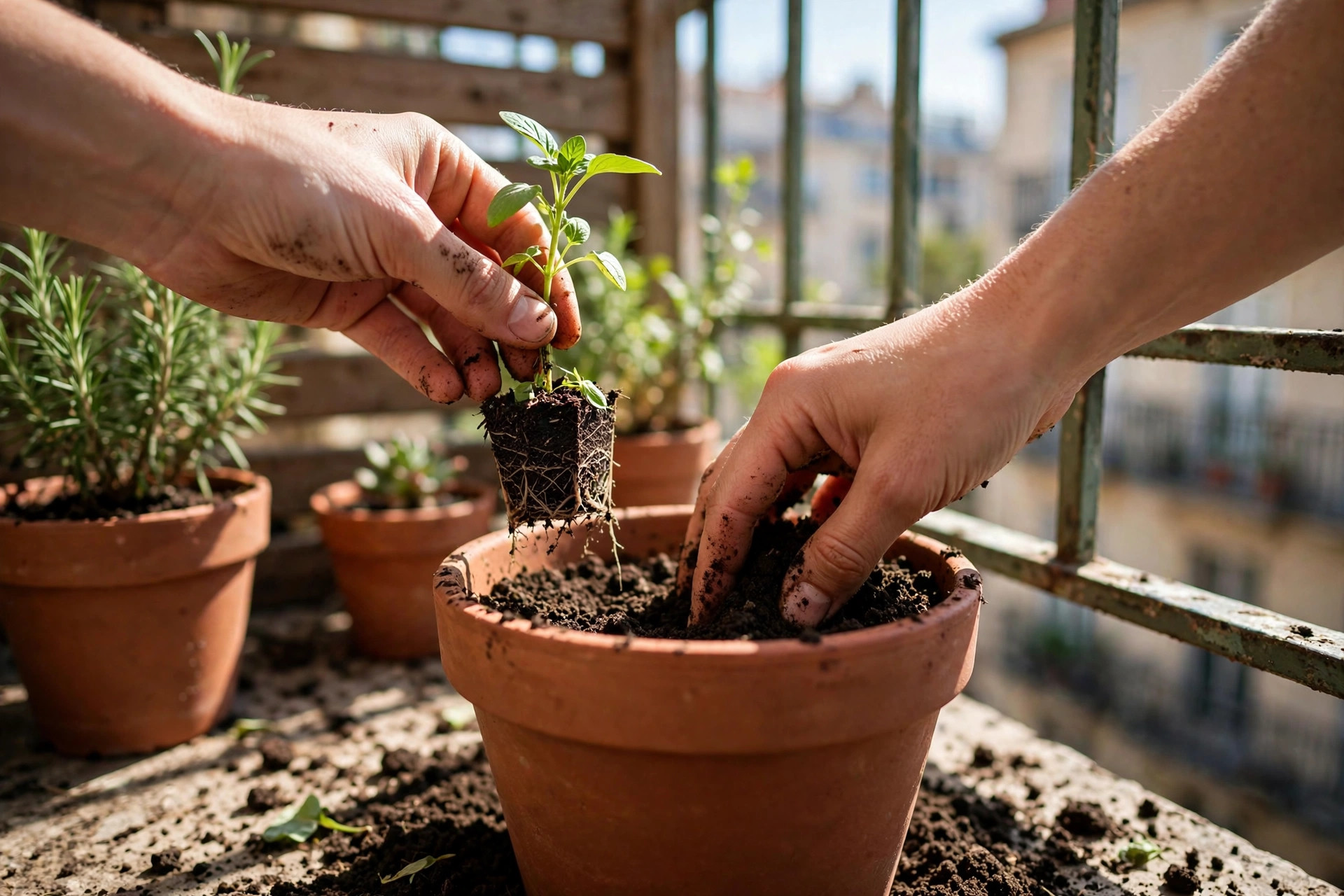
Containers are the small-space gardener’s superpower: no digging, total control, and you can rearrange anytime. Follow the thriller, filler, spiller formula for gorgeous pots: one tall dramatic plant in the center (thriller), mounding flowers or herbs around it (filler), and trailing plants cascading over the edge (spiller).
- Thriller: dwarf grasses, small cordyline, or a compact tomato.
- Filler: basil, petunias, marigolds, or lettuce.
- Spiller: trailing rosemary, sweet potato vine, or nasturtiums.
Choose fewer, larger pots over many tiny ones — big containers hold moisture longer, look more designed, and need less watering. Herbs are perfect starter plants: useful, fragrant, and forgiving.
Create Zones, Even in 50 Square Feet
Zoning makes a small space feel bigger by giving it purpose. Lay an outdoor rug to define a lounge zone with your chairs — the rug visually anchors the area like walls would indoors. Tuck a tiny café corner into the sunniest spot for morning coffee, and keep a reading nook in the shadier corner with a cushion and a lantern. Even simple dividers work: a tall planter, a bamboo screen, or a curtain panel on a tension rod separates zones without blocking light. The key is that each zone has one clear job, so the space feels composed instead of cramped.
Add Softness With Textiles
Hard surfaces make small spaces feel stark; textiles make them feel like rooms. An outdoor rug instantly warms concrete or decking — choose a flat-weave polypropylene rug that hoses clean. Add weather-resistant cushions in colors that echo your plants (greens, terracotta, warm yellows) for comfort and cohesion. A lightweight throw draped over a chair invites evening lingering. The practical rule: if your space is uncovered, store cushions in your storage bench or a deck box when rain threatens, and they will last for years.
Keep It Low-Maintenance
A small space should be a joy, not a chore. Choose drought-tolerant plants like lavender, succulents, and ornamental grasses that thrive on neglect, and mulch container tops with bark or gravel to lock in moisture and stop weeds. Self-watering planters or a simple drip kit on a timer handle vacations effortlessly. Pick easy-clean surfaces — composite decking, washable rugs, powder-coated metal furniture — so a quick hose-down restores everything. Spend your time enjoying the space, not maintaining it.
Frequently Asked Questions
What plants are best for a small balcony?
Match plants to your sun: herbs (basil, mint, thyme), cherry tomatoes, and peppers love full sun, while ferns, begonias, and impatiens thrive in shade. Trailing plants like pothos and string-of-pearls add drama without floor space. Start with five or six plants, learn what thrives, and expand from success.
How do I make a tiny patio feel bigger?
Keep the palette light and cohesive, use vertical lines to draw eyes up, and resist overcrowding — negative space is your friend. A mirror on one wall can double the sense of space (angle it to reflect greenery, not the neighbor’s wall). Consistent flooring and one bold focal point, like a statement planter, also create an illusion of size.
Can I garden with no yard at all?
Absolutely. A sunny windowsill grows herbs year-round, railing planters turn a balcony edge into a garden bed, and a single large pot can hold a surprising salad garden. If you crave more, look into community garden plots — many cities rent them cheaply, giving you full garden space without owning land.
How do I weatherproof a small space on a budget?
Choose powder-coated metal or resin furniture that shrugs off rain, use outdoor-rated fabrics, and store cushions in a deck box or storage bench during storms. A simple waterproof cover for the grill or table costs little and extends furniture life dramatically. Bring delicate pots indoors before the first frost.
The bottom line: small outdoor spaces reward creativity more than square footage. Go vertical, choose hardworking furniture, layer warm light, and keep maintenance easy. Start with one corner this weekend — a couple of pots and a string of lights — and watch how quickly it becomes your favorite seat in the house.