Cats are connoisseurs of comfort. A creature that sleeps up to sixteen hours a day takes its resting places very seriously — which is why your cat will ignore the expensive bed you bought and claim your laundry basket instead. The secret is not spending more money. It is understanding what cats actually want: warmth, height, hiding spots, texture, and a sense of safety.
Whether you live in a studio apartment or a spacious house, you can create cozy corners your cat will genuinely love. This guide covers the feline comfort playbook — from sunny window perches to snug hideaways — with simple DIY ideas and smart placement tips that work with your cat’s natural instincts, not against them.
Think Like a Cat: What “Cozy” Really Means
To a cat, cozy is not about thread count — it is about security. In the wild, cats are both predators and prey, so their ideal resting spot lets them observe without being seen, stay warm with minimal effort, and escape quickly if needed. That is why cats adore boxes (enclosed, defensible), high shelves (great vantage point), and your laptop keyboard (warm and smells like you).
Watch where your cat already chooses to sleep. Those spots reveal their preferences: sunbeams mean they crave warmth, high shelves mean they want vantage, closets mean they want enclosure. Your job is simply to make those preferred types of spots even better — a soft blanket in the sunny corner, a cleared shelf with a cushion, a box upgraded with a warm pad. Follow their lead and you cannot go wrong.
The Sunny Window Perch: Every Cat’s Favorite
If you do one thing for your cat, make it a window spot. Cats are solar-powered — they seek warmth instinctively, and a sunny window delivers warmth plus the best entertainment in the house: birds, squirrels, falling leaves, passing dogs. A window perch turns a boring afternoon into a full nature documentary.
You have options at every budget. A simple suction-cup window hammock costs little and installs in minutes (check the weight rating and your cat’s weight first). A sturdy cat tree placed by the window gives climbing plus lounging. Or go DIY: clear off a wide windowsill, add a folded fleece blanket, and you are done. Place a bird feeder outside the window — at a safe distance — and your cat will thank you with hours of chattering fascination. Just make sure screens are secure; an open window without a sturdy screen is a serious fall risk, even from the first floor.
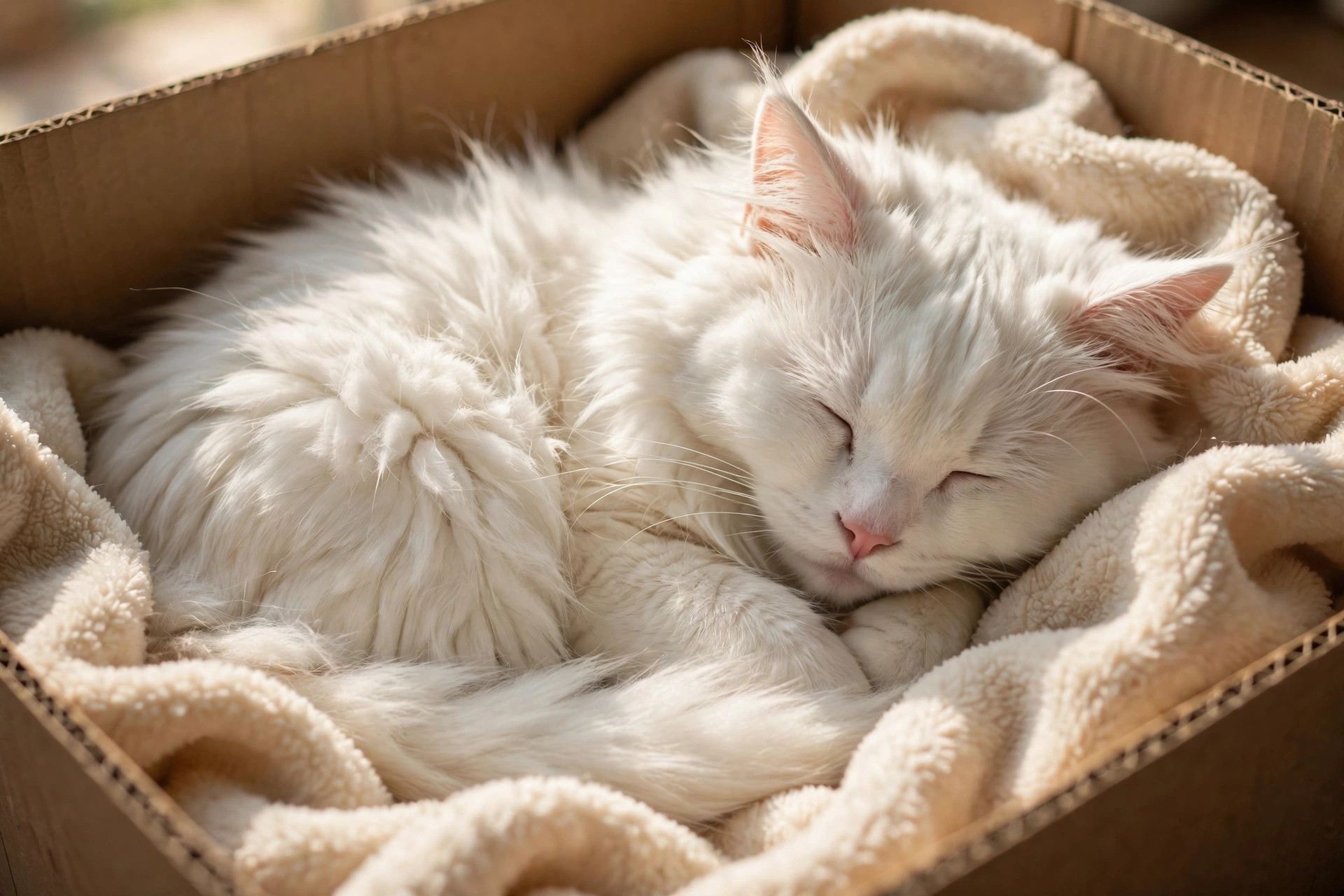
Hideaways and Nooks: The Power of the Box
Never underestimate a cardboard box. Studies have shown that cats with access to hiding boxes recover from stress faster than those without. A box is a cave, a fortress, and a nap pod all in one — and it is free. Cut a doorway in the side, toss in a soft blanket, and place it in a quiet corner. Most cats will move in within the hour.
Beyond boxes, create hideaways from what you own: an open closet shelf with a cushion, the space under a bed with a blanket draped over the side, a covered cat bed tucked beside the sofa. The key features are the same — enclosed on most sides, one entrance, soft flooring, and located somewhere calm. In multi-cat homes, provide at least one hideaway per cat plus one spare, so nobody has to queue for privacy. Washable covers are a must, because cozy spots get used hard.
Go Vertical: Shelves, Trees, and High Places
Cats feel safest up high, where they can survey their territory. Vertical space is especially valuable in small homes — it multiplies your cat’s living area without taking a single square foot of floor. A tall, sturdy cat tree near a window is the classic solution, giving scratching, climbing, perching, and napping in one piece of furniture.
For a sleeker look, install floating wall shelves as a “cat highway” — staggered shelves that let your cat climb from floor to a high perch. Use solid brackets rated well above your cat’s weight, add non-slip mats or carpet squares on each shelf, and end the route at a comfortable bed or enclosed cube. Avoid placing the highest perch directly above hard tile; a soft landing zone below is simple insurance. Even clearing the top of a bookshelf and adding a cushion creates a beloved lookout.
Warmth: The Ultimate Cat Luxury
Cats run warmer than we do and lose heat quickly when resting, which is why they gravitate to radiators, sunny spots, and your lap. A heated pet bed — the kind with a low-wattage, thermostat-controlled pad — is pure bliss for older cats or chilly homes, and far safer than a human heating pad, which can burn.
Budget alternatives work beautifully: a blanket fresh from the dryer, a sunny afternoon spot, or a bed placed near (never on) a radiator. In winter, move favorite beds away from drafty doors and windows. Self-warming mats, which reflect the cat’s own body heat, are inexpensive and need no electricity. Whatever you choose, give your cat a choice — one warm spot and one regular spot — so they can regulate their own comfort.
Texture and Scent: The Details Cats Notice
Cats are tactile creatures. Most prefer soft, warm textures — fleece, flannel, and faux fur beat scratchy or slippery fabrics every time. Line hard perches and shelves with washable pads. Avoid heavily scented detergents on cat bedding; that “fresh meadow” smell you love can be overwhelming to a nose thousands of times more sensitive than yours. Unscented detergent keeps bedding welcoming.
Scent-marking is how cats claim a space as safe, so do not over-clean their favorite spots. When you wash a beloved bed, leave one familiar item — a small blanket or your worn T-shirt — unwashed nearby. Catnip or silvervine sprinkled on a new bed can encourage a hesitant cat to try it, though about a third of cats do not respond to catnip at all. Let your cat rub, knead, and drool on their spots freely; those are signs of deep contentment, not messiness.
Frequently Asked Questions
Why does my cat sleep in the box instead of the expensive bed I bought?
Because the box feels safer — enclosed, snug, and defensible. Expensive beds often fail because they are too open, too exposed, or placed in busy areas. Try moving the nice bed into a quiet corner, partially covering it with a blanket to create a “cave” feel, or placing it where the box currently sits. Location and enclosure matter more than price.
How many cozy spots does one cat need?
Aim for at least three: one sunny/warm spot, one hidden/enclosed spot, and one high perch. This covers the main feline comfort modes and gives your cat choices as their mood, the temperature, and the household activity change through the day. More is always welcome — cats rarely complain about too many napping options.
Is it safe to let my cat sleep on a heated bed all day?
Pet-specific heated beds with thermostats are designed for extended use and stay at a safe, low temperature. Still, always give your cat the choice to move off it, check the product for chew-proof cords, and inspect it regularly for damage. Skip human heating pads, which can reach burn temperatures, and never use a heated bed for kittens under a few weeks old without guidance from your vet.
My cat only sleeps on my clothes. How do I get them to use their own bed?
That is a compliment — your scent is their favorite comfort object. Put a worn (unwashed) T-shirt on their new bed to transfer the magic. Place the bed where they already like to rest, warm it slightly, and reward any interest with treats. Most cats convert within a week or two once the bed smells right and sits in the right spot.
Creating a cozy space for your cat is really an exercise in observation. Watch where they go, notice what they choose, and then make those places softer, warmer, and safer. You will be rewarded with the deepest purrs, the floppiest naps, and a cat who clearly believes your home was designed entirely around them — which, let us be honest, it now is.