Bringing home a dog is one of life’s great joys — and, let’s be honest, a bit of a beautiful chaos at first. Whether you’ve adopted a wiggly puppy or a calm older dog, the first weeks set the tone for everything that follows. The good news is that good dog care isn’t complicated. It comes down to a handful of basics done consistently: the right food, gentle training, daily exercise, routine health care, and plenty of your time.
This guide walks new dog owners through each of those basics in plain, practical language. No jargon, no overwhelm — just the things that actually matter, in the order you’ll need them, so you and your new best friend can settle into a happy life together.
Bringing Your Dog Home: The First Week
Before your dog arrives, prepare a small, safe starter zone. Choose one room or a corner with a bed, water bowl, a few chew toys, and a baby gate or closed door. Dogs feel calmer in a defined space than loose in a whole unfamiliar house. Stock up on the essentials: food, bowls, a collar and leash, ID tags, poop bags, treats for training, and an enzyme cleaner for the accidents that will definitely happen.
Keep the first days quiet and predictable. Let your dog sniff around at their own pace, show them where the water and their bed are, and take them outside often — after meals, naps, and play. Feed at the same times, walk the same short route, and keep greetings calm. Puppies and newly adopted dogs are learning that this new place is safe, and routine is what teaches them that fastest.
Feeding Your Dog the Right Way
Food is the foundation of your dog’s health, energy, and even behavior. Choose a complete, balanced dog food matched to your dog’s life stage — puppy, adult, or senior — because their nutritional needs genuinely differ. Puppies need more protein and calories for growth, while seniors often do better with joint-supporting, lower-calorie recipes.
Feed measured meals rather than leaving food out all day. Most adult dogs do well on two meals; puppies need three or four smaller ones. Use the package guide as a starting point, then adjust by watching your dog’s body: you should be able to feel ribs under a light fat covering, and see a gentle waist from above. Keep fresh water available at all times, and go easy on treats — they should make up no more than about ten percent of daily calories. Finally, learn the toxic list: chocolate, grapes, raisins, onions, garlic, xylitol, and cooked bones should never reach your dog.
Training Basics That Make Life Easier
Training isn’t about tricks — it’s about communication. A dog who understands a few simple cues is safer, calmer, and far more fun to live with. Start with five essentials: sit, stay, come, down, and leave it. Teach them with positive reinforcement: mark the right behavior the instant it happens (a cheerful “yes!”) and follow with a small treat or praise.
Keep sessions short — five to ten minutes, a few times a day — and always end on a success. Dogs learn by repetition and reward, never by punishment; scolding a dog for something it did earlier only confuses it. House training follows the same logic: take your dog out frequently, praise generously the moment they go outside, and clean indoor accidents without fuss. And crate training, done gradually with treats and open-door practice, gives your dog a cozy den of their own and gives you a safe management tool for travel, rest, and recovery.
Exercise, Play, and Socialization
Every dog needs daily movement, but the right amount depends on breed, age, and health. A young border collie might need ninety minutes of activity; a senior bulldog may be content with two gentle twenty-minute walks. As a rough guide, most adult dogs thrive on 30 to 60 minutes of real exercise a day, mixing walks with play like fetch or tug.
Mental exercise counts just as much. Puzzle feeders, snuffle mats, hide-and-seek with treats, and learning a new trick all tire a dog’s brain in the best way. Socialization matters too: calmly expose puppies and new dogs to different people, friendly dogs, sounds, and places, always at a pace they can handle. A well-exercised, well-socialized dog is rarely a destructive one — most chewing, barking, and digging is simply boredom looking for a job.
Health, Grooming, and Vet Care
Partner with a veterinarian early. Schedule a checkup within the first week or two of bringing your dog home, keep core vaccinations current, and stay on schedule with flea, tick, and heartworm prevention. Annual exams (twice yearly for seniors) catch small problems while they’re still small. Spaying or neutering, unless you’re working with a responsible breeder, prevents health issues and unwanted litters.
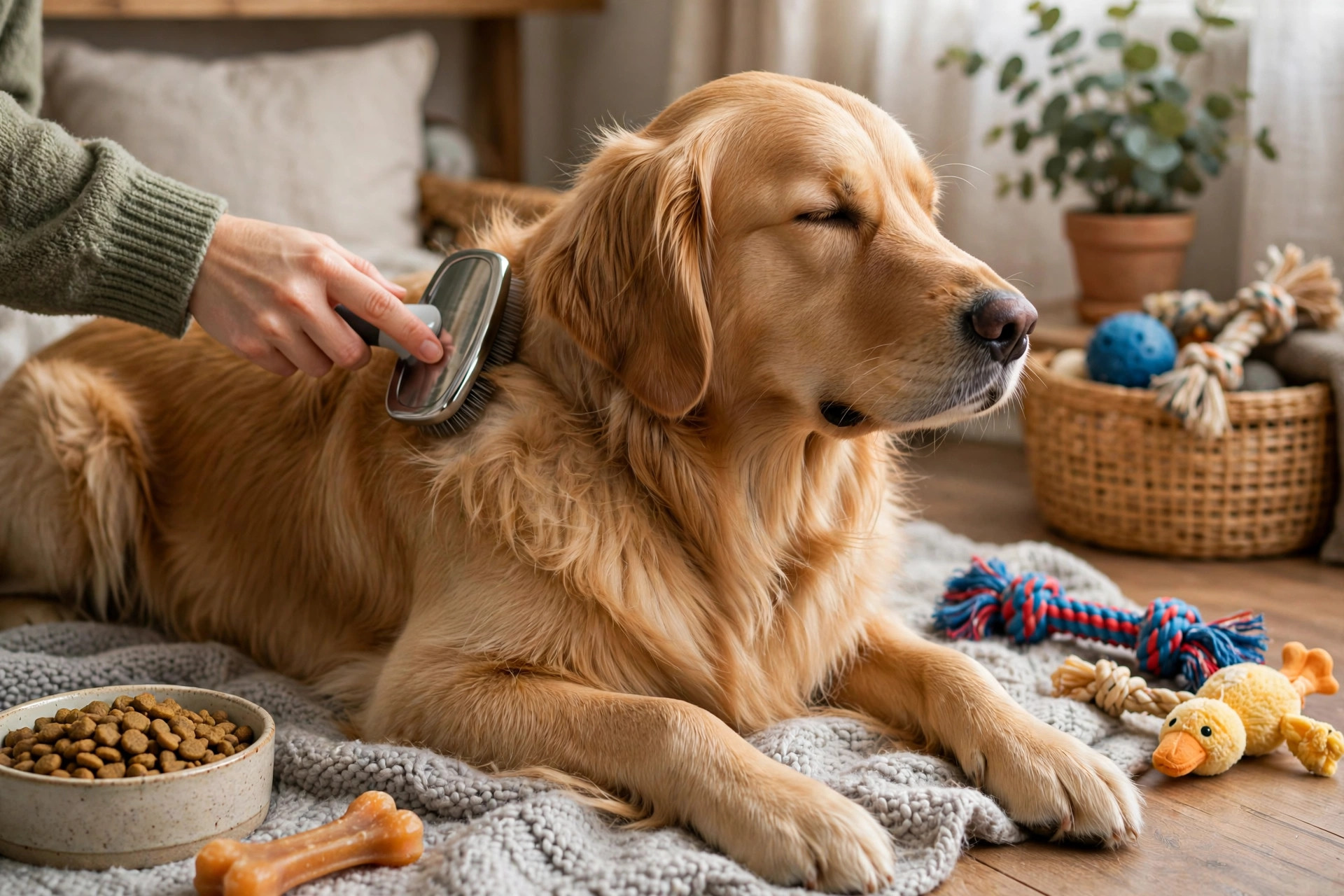
At home, a simple weekly routine covers most grooming: brush the coat to remove loose fur and check skin, trim nails every few weeks, peek in ears for redness or odor, and brush teeth with dog-safe toothpaste as often as you can manage. Watch for changes in appetite, energy, drinking, or bathroom habits — dogs hide discomfort well, so subtle changes are worth a vet call.
Frequently Asked Questions
How much exercise does a new dog really need?
It depends on breed and age, but most adult dogs do well with 30–60 minutes of combined walks and play each day. Puppies need shorter, frequent play sessions — a common guide is five minutes per month of age, twice a day — to protect growing joints.
What should I feed my dog, and how much?
Choose a complete food made for your dog’s life stage, follow the package amounts as a starting point, and adjust to keep a healthy body condition — ribs easy to feel, waist visible. When in doubt, ask your vet to confirm portions at your first visit.
How long does house training take?
Most puppies show real progress in a few weeks and are fairly reliable by four to six months, with consistency. Adult rescue dogs may learn faster or need a refresher. Frequent outdoor trips, supervision, and big praise for outdoor success are the whole secret.
When should I start training my dog?
Immediately — but keep it gentle and short. Even on day one you can reward your dog for looking at you, coming when called, and settling on their bed. Early positive habits are much easier to build than old ones are to undo.
Dog care really is simpler than it first feels: feed well, move daily, train kindly, and stay ahead of health basics. Do those things with love and consistency, and your new dog will repay you with years of loyalty, laughter, and companionship.