An indoor cat can live a wonderfully happy, stimulating life — but it doesn’t happen by accident. Inside four walls, your cat relies on you for everything the outdoors would normally provide: things to hunt, places to climb, corners to explore, and new smells to investigate. When those needs go unmet, boredom shows up as midnight zoomies, shredded furniture, over-grooming, or a cat who simply sleeps the day away.
The fix is enrichment — small, thoughtful additions to your home and routine that let your cat be a cat. None of it needs to be expensive. This guide covers the most effective indoor cat enrichment ideas, from play that satisfies the hunting instinct to cozy territory upgrades your cat will claim within the hour.
Play That Satisfies the Hunting Instinct
Cats are built for a sequence: stalk, chase, catch, eat. Indoor play works best when it follows that same pattern. Wand toys, feather teasers, and laser pointers (always end laser play with a real toy to “catch”) let your cat stalk and pounce the way nature intended. Drag the toy away from your cat, let it “hide” behind furniture, and pause so they can wiggle and ambush — movement away triggers the chase far better than a toy waved in their face.
Aim for two or three short sessions a day, around ten to fifteen minutes each, and finish with a small meal or treat. This “hunt, catch, eat” rhythm satisfies something deep in a cat’s brain and often calms evening restlessness. Rotate toys every few days — putting half away and swapping them back in makes old toys feel brand new again.
Feed the Brain: Puzzle Feeders and Food Games
In the wild, cats work for every bite. Eating from a bowl in thirty seconds leaves a lot of mental energy unused. Puzzle feeders — balls, boards, and rolling toys that release kibble as your cat bats them around — turn mealtime into a satisfying challenge. Start easy so your cat wins quickly, then raise the difficulty as they get clever.
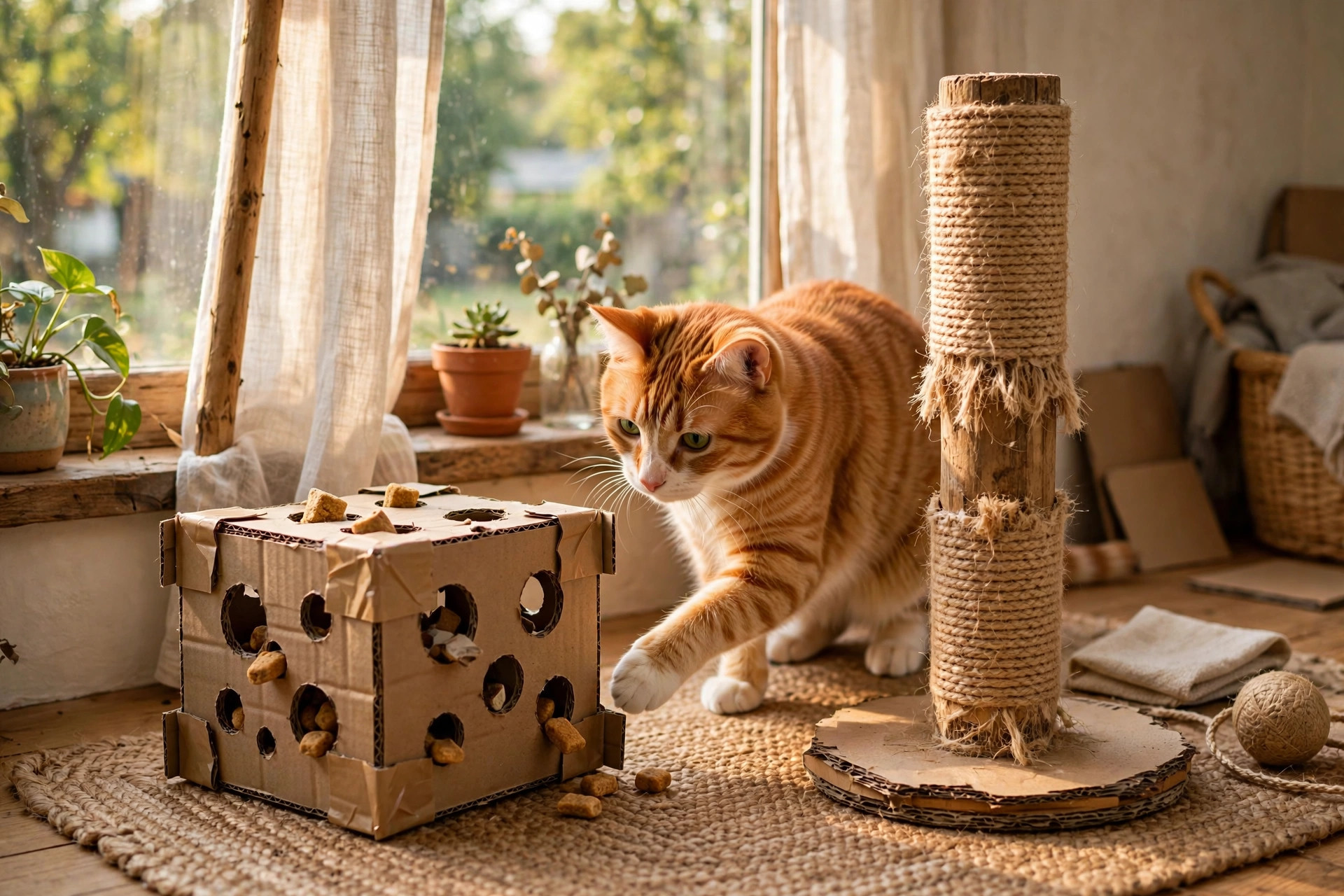
You don’t need to buy anything to begin. Hide small portions of kibble or treats around a room: on shelves, inside a cardboard box, under a scrunched paper ball. Scatter feeding in a muffin tin covered with tennis balls is another easy DIY puzzle. Even five minutes of food foraging a day noticeably reduces bored pacing and yowling in many indoor cats.
Build Vertical Territory: Climb, Perch, Survey
To a cat, height means safety and status. A tall cat tree near a window is the classic enrichment upgrade, combining climbing, scratching, perching, and bird-watching in one piece of furniture. If space or budget is tight, a single sturdy wall shelf, a cleared bookshelf top with a cushion, or a window perch with suction cups delivers much of the same joy.
Think in routes, not single spots. Cats love a “highway” — shelves or furniture arranged so they can travel across a room without touching the floor. Add a soft pad on each landing, keep the highest point comfortable, and place one perch where your cat can watch household activity. In multi-cat homes, multiple high spots prevent competition, because the best seat in the house shouldn’t have to be fought over.
Scratching, Hiding, and Sensory Fun
Scratching is a need, not a naughty habit — it maintains claws, stretches muscles, and marks territory. Offer choices: a tall sisal post for full-body stretches, a flat cardboard scratcher for horizontal scratchers, and a carpeted surface if that’s what your cat prefers. Place scratchers where your cat already scratches (often beside sleeping spots and sofas) and reward use with treats and praise.
Then add the sensory extras cats adore. A cardboard box with two doorways cut in the sides becomes a fort, an ambush site, and a nap cave. A paper bag (handles removed) crinkles delightfully. Cat-safe grass, catnip, or silvervine toys engage scent — note that about a third of cats don’t respond to catnip, but most love silvervine. A window bird feeder outside the glass provides hours of “cat television,” and a rotating selection of tunnels, crinkle balls, and kick sticks keeps curiosity alive.
Daily Connection: Training, Grooming, and Quiet Time
Enrichment isn’t only objects — it’s also you. Many cats genuinely enjoy learning: with a few treats and five patient minutes, most cats can learn to come when called, give a high five, or walk into their carrier on cue. Training builds confidence, especially in shy cats, and carrier training makes vet trips dramatically less stressful for everyone.
Pair that with gentle daily rituals your cat chooses: a brushing session if they love it, a sunny lap nap, or simply sitting together while you read. Watch your cat’s signals and let them end interactions — a cat who can choose to engage or walk away feels secure, and secure cats play more, explore more, and stress less.
Frequently Asked Questions
How much playtime does an indoor cat actually need?
Most cats do well with two or three interactive sessions of ten to fifteen minutes daily. Kittens and young cats may want more; seniors often prefer shorter, gentler play. Consistency matters more than marathon sessions — a little every day beats an hour once a week.
My cat ignores every toy I buy. What am I doing wrong?
Probably nothing — you may just have the wrong toy type or timing. Try toys that mimic your cat’s preference: birds (feather wands, up high), mice (small toys skittering along the floor), or bugs (tiny toys on a string). Play when your cat is naturally active, usually dawn and dusk, and end with a treat.
Are puzzle feeders suitable for every cat?
Yes, if you start simple. Choose an easy puzzle first so your cat succeeds quickly, and supervise the first tries. For cats on measured diets, puzzles are actually helpful — they slow down fast eaters and make a set portion last much longer.
How do I enrich a small apartment for a cat?
Go vertical and rotate. One window perch, one tall scratcher, a shelf highway, and a box fort take almost no floor space. Rotate toys weekly, use puzzle feeding, and play daily — a small, interesting home beats a big, boring one every time.
A happy indoor cat isn’t one with the most toys — it’s one whose days include hunting, climbing, scratching, foraging, and time with you. Add a little of each, rotate the fun, and your home becomes a whole world worth exploring.