A beautiful yard is not made in a single spring weekend. It is made by small, well-timed jobs spread across the year — a prune here, a feed there, mulch at the right moment. Gardeners who seem to have effortlessly lovely gardens are rarely working harder than everyone else. They are simply working with the seasons instead of against them, doing each task when nature makes it easy.
This guide breaks garden care into four simple seasonal rhythms, plus the year-round habits that tie everything together. Whether your yard is a flower-filled cottage garden or a simple lawn with borders, following the seasons will keep it looking cared for in every month — and turn garden work from a chore into a pleasant ritual.
Spring: Wake the Garden Up
Spring is the garden’s new year, and it rewards early attention more than any other season. As soon as the soil can be worked, clear away winter debris — fallen branches, matted leaves, and dead growth from perennials — so new shoots get light and air. Cut back ornamental grasses and last year’s perennial stems just as fresh growth appears at the base.
This is also the season of feeding and dividing. Spread compost or a balanced fertilizer around shrubs, roses, and borders as growth begins. Divide overgrown perennials like hostas and daylilies and replant the extras — free plants for empty corners. Edge your beds, refresh mulch to about five centimetres deep, and sow hardy seeds outdoors once frosts have passed, and your garden will rocket into summer.
Summer: Water Wisely and Keep Blooms Coming
Summer care is mostly about water and small, frequent kindnesses. Water deeply and less often — a thorough soak once or twice a week trains roots to grow down, while daily sprinkles keep them shallow and needy. Water early in the morning at the base of plants, and give pots and hanging baskets daily attention, since they dry out fast in heat and wind.
Deadheading and Other Five-Minute Jobs
The great summer secret is deadheading: snipping faded flowers from roses, geraniums, cosmos, and most annuals tells the plant to make more blooms instead of seeds. Ten minutes with scissors twice a week keeps borders flowering for months. Stake tall plants like delphiniums and dahlias before they flop, keep an eye out for aphids (a strong jet of water handles most), and top up mulch if it has thinned. Harvest vegetables and herbs little and often — regular picking is regular pruning, and plants repay it with more growth.
Autumn: Plant, Feed, and Put Beds to Rest
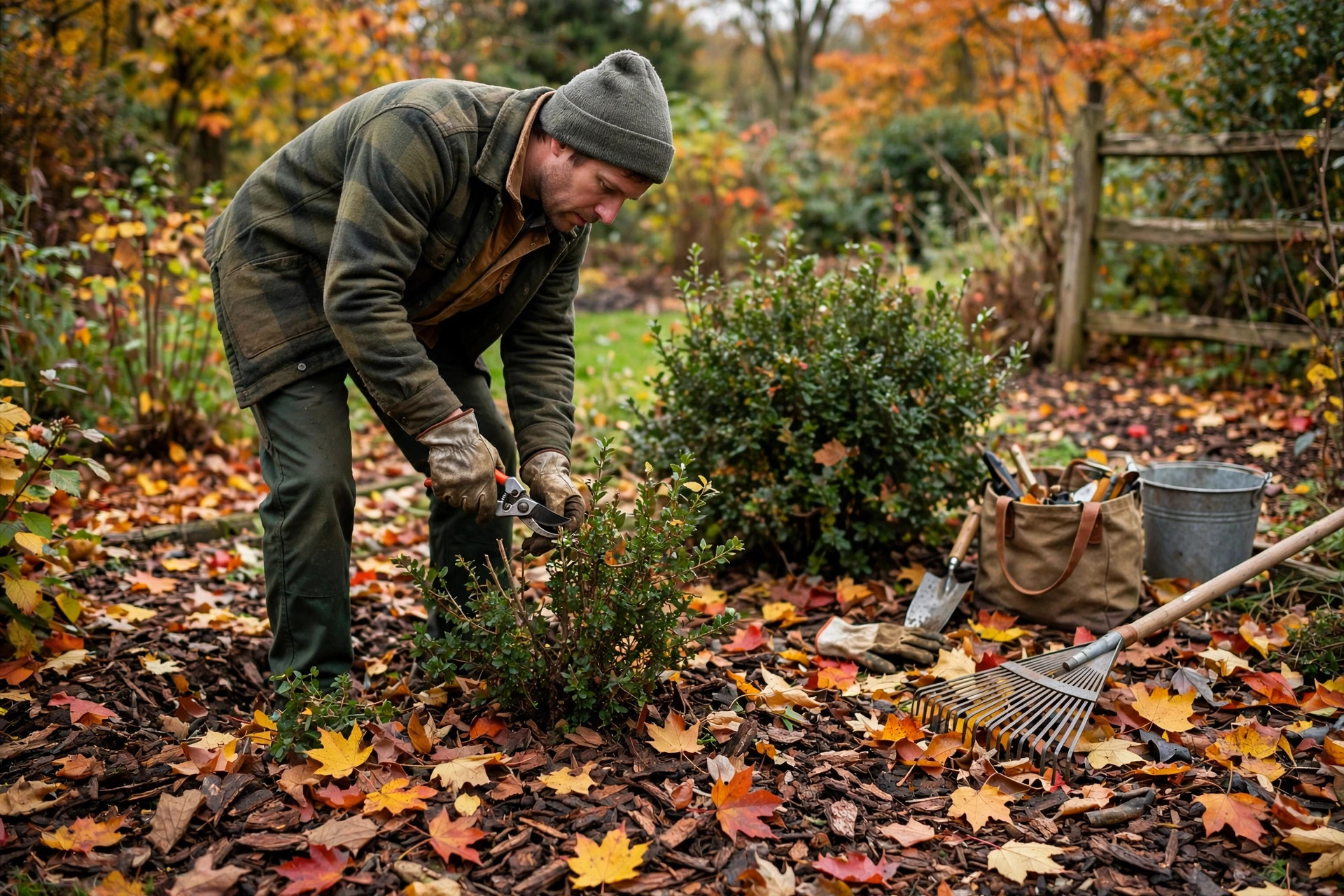
Autumn is secretly the best planting season of all. The soil is still warm from summer, rains return, and roots grow strongly while the top of the plant rests. Trees, shrubs, hedges, and spring bulbs planted now settle in beautifully and surge ahead next year. Tulips, daffodils, and crocuses planted in autumn are spring’s first gift to yourself.
As growth slows, tidy with a gentle hand. Leave some seed heads and stems standing — they feed birds and shelter insects through winter, and look beautiful in frost. Rake leaves off lawns (they smother grass) but pile them in corners or a leaf bin to become next year’s leaf mould. Give lawns an autumn feed, plant garlic and spring bulbs, and move tender potted plants under cover before the first hard frost. A layer of compost over borders now is insulation and a spring feast in one.
Winter: Protect, Plan, and Dream
Winter is the garden’s quiet season, but not an empty one. Protect what frost can harm: wrap tender shrubs in fleece during hard freezes, raise pots onto feet so they drain and do not crack, and move the most delicate plants to a sheltered wall or cold frame. On mild days, prune deciduous trees and shrubs while their shape is easy to see, and cut back hedges you missed in autumn.
Then enjoy the gardener’s favorite winter work: planning. Flip through seed catalogs, sketch next year’s beds, and order seeds early while choices are best. Clean, oil, and sharpen your tools so spring starts smoothly. Feed the birds, watch the winter silhouettes of your trees, and notice how much structure your garden has even now. A garden you love in January is a garden designed for all year, not just June.
Year-Round Habits That Make Every Season Easier
Five small habits tie the whole year together. First, mulch generously — it suppresses weeds, holds moisture, feeds soil, and makes beds look instantly tidy. Second, feed the soil, not just the plants: an annual layer of compost improves every garden more than any bottle. Third, walk your garden weekly with a bucket and hand fork; five-minute rescues — a weed pulled, a tie fixed, a pest spotted — prevent almost every big problem.
The best garden tool is your own attention, applied little and often.
Fourth, keep a simple garden notebook: what you planted, what thrived, what sulked. Next year’s decisions become wonderfully easy. Fifth, water with intention — deeply, at soil level, and only when plants need it. Gardens cared for in this steady rhythm rarely demand heroic rescue efforts; they simply keep getting better, season after season, in a way that feels almost effortless.
Frequently Asked Questions
What is the single most important garden job each season?
In spring, clear and feed — tidy beds and add compost as growth starts. In summer, water deeply and deadhead flowers. In autumn, plant and mulch — get bulbs and shrubs in while soil is warm. In winter, protect tender plants and prune while shrubs are bare. One well-chosen job per season, done on time, beats a weekend of random effort.
How often should I water my garden in summer?
Beds and lawns do best with a deep soak once or twice a week rather than daily sprinkles, which encourage shallow roots. Pots and hanging baskets are the exception — check them daily in hot or windy weather. Water early in the morning, at the base of plants, and let the finger test guide you: dry soil a few centimetres down means it is time.
Should I cut everything back in autumn?
No — tidy selectively. Remove diseased leaves and anything that has collapsed into mush, but leave sturdy seed heads, grasses, and stems standing. They feed birds, shelter overwintering insects, and give the winter garden structure and frost-catching beauty. Do the main cut-back in early spring instead, just as new growth starts.
How can I keep my yard looking good in winter?
Plan for structure: evergreen shrubs, a small conifer, bark-textured trees, and ornamental grasses all earn their keep in winter. Add early bulbs, keep paths swept, raise pots onto feet, and leave seed heads for frosty mornings. A bird feeder near a window brings the garden to life even on the greyest day.
A garden cared for season by season never becomes a burden — it becomes a rhythm, like the year itself. Feed it in spring, water it kindly in summer, plant in autumn, and dream over it in winter, and your yard will reward you with beauty in every month.