Every pet deserves daily care and attention — but let’s be honest about real life. Between work, school runs, and everything else a busy family juggles, a pet that needs hours of exercise or constant grooming can quickly become a source of stress instead of joy. The good news is that some wonderful animals genuinely thrive on a lighter routine, asking for little more than a clean home, regular food, and a bit of your company.
This guide looks at the best low-maintenance pets for busy families — what each one needs, what it doesn’t, and how to choose honestly. Because the kindest choice isn’t the pet that asks for the least on paper; it’s the one whose needs truly fit the life you already live.
What “Low-Maintenance” Really Means
No pet is no-maintenance. Every animal needs food, fresh water, a clean living space, health attention, and some interaction. “Low-maintenance” really means a pet whose care comes in short, predictable tasks rather than long daily commitments — no twice-daily hour-long walks, no elaborate grooming, no constant supervision.
Before choosing, be honest about three things: your daily time (fifteen spare minutes is very different from two hours), your budget for food, equipment, and vet care, and your space. Also think about lifespan — a goldfish may live a decade, a parrot several. Matching the animal to your household’s reality is what makes pet ownership easy instead of overwhelming.
Fish: Beauty With a Weekly Rhythm
A small freshwater aquarium is often the perfect busy-family pet. A hardy betta in a filtered five-gallon tank, or a small group of tetras or guppies, needs only daily feeding (two minutes), a partial water change once a week, and occasional filter checks. There’s no walking, no grooming, no noise — just a calm, living decoration that children love watching.
The work with fish is front-loaded: research before you buy, set up the tank properly, and cycle it before adding fish. Choose hardy species, avoid overstocking, and resist overfeeding, the most common beginner mistake. Do that, and a small tank becomes one of the least demanding, most relaxing pets a family can keep.
Small Mammals That Fit Busy Schedules
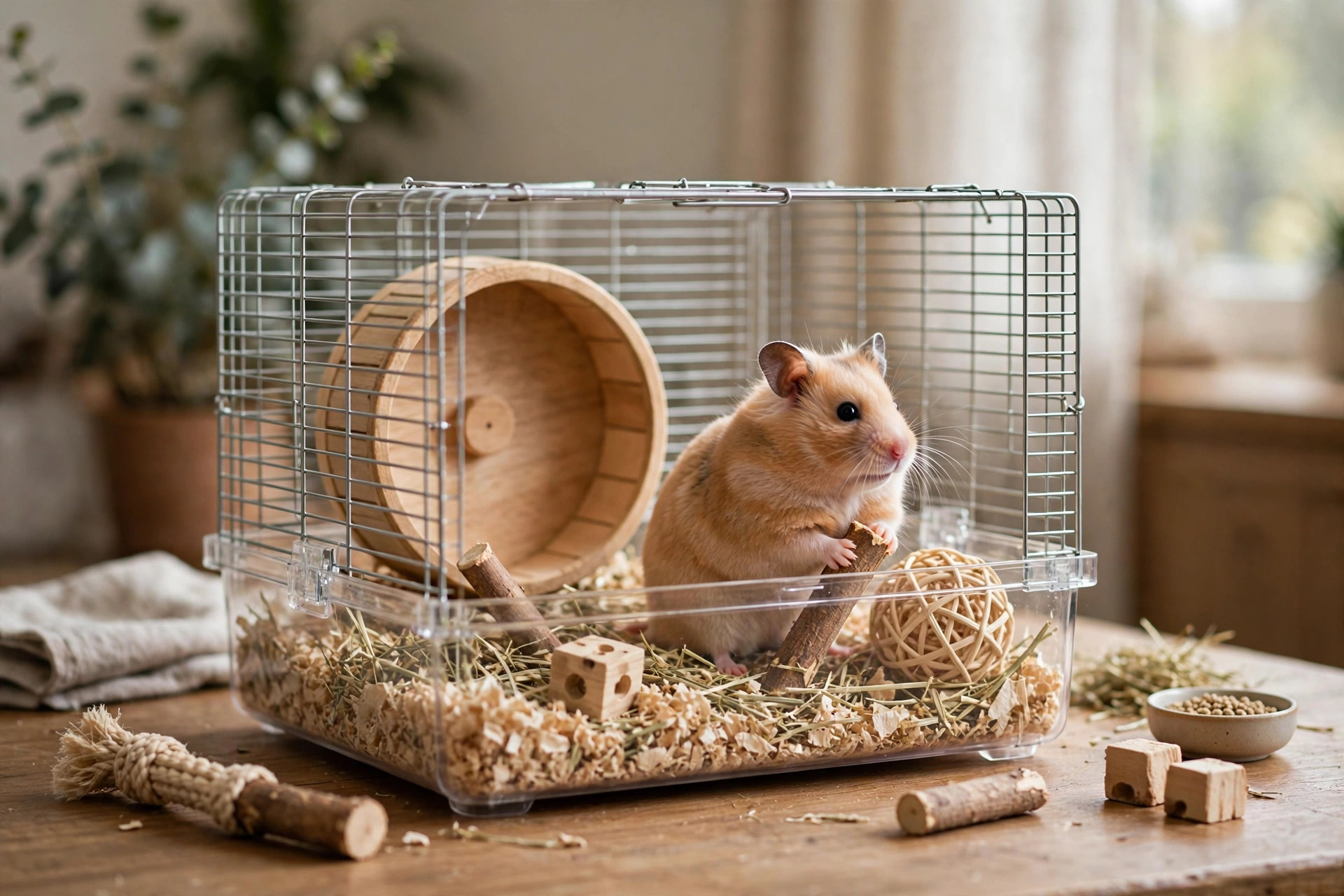
Several small mammals suit families who have short pockets of time rather than long ones. A hamster is largely self-contained: a roomy cage, wheel, chew toys, daily food and water, spot-cleaning a few times a week, and gentle handling in the evening when they’re naturally awake. Guinea pigs are friendlier and more social — they need a companion of their own kind, daily hay and vegetables, and a bigger cage — but reward you with cheerful, cuddly personalities.
Rats surprise many people: they’re clean, clever, and affectionate, and they enjoy short daily play sessions out of the cage. Whichever you choose, the pattern is similar — care in small, regular doses, plus the non-negotiable basics of space, enrichment, and a friend of their own species where social.
Reptiles and Other Quiet Companions
For families who like something different, some reptiles are famously undemanding once set up correctly. A leopard gecko needs no UV light, eats insects a few times a week, and is gentle to handle. A corn snake eats roughly once a week, needs minimal handling, and can live happily in a modest enclosure. Even a small group of hermit crabs or a hardy tarantula can fascinate older children with very little daily input.
The catch is setup: temperature, humidity, and lighting must be right from day one, and that takes research and proper equipment. Reptiles also live a long time and aren’t cuddly in the way mammals are. For the right family, though, their calm, weekly rhythm of care is hard to beat.
Pets That Are NOT as Easy as They Look
Honesty matters here, because some “easy” reputations are myths. Rabbits are often sold as low-effort, but they need hours of daily exercise outside a pen, constant hay, careful diets, and regular grooming — they’re closer to a cat in workload. Birds like budgies are delightful but social and intelligent; alone all day with no interaction, they become lonely and loud. And while cats are more independent than dogs, they still need daily play, litter care, and real companionship.
None of this makes these animals bad choices — for many families they’re perfect. It simply means choosing them with eyes open. A pet matched honestly to your routine stays a joy; a pet chosen on a myth becomes a burden, and neither outcome is fair to the animal.
Frequently Asked Questions
What is the easiest pet for a busy family overall?
For most households, a properly set up small fish tank or a hamster comes closest: a few minutes of care a day and a short weekly clean. The real answer depends on your family, though — the easiest pet is the one whose routine fits time you genuinely have.
Are low-maintenance pets good for young children?
They can be, with supervision. Fish are wonderful for children to watch and help feed. Hamsters and guinea pigs teach gentle handling, but an adult must own the care routine — children lose interest, and the pet’s needs don’t pause.
How much do low-maintenance pets cost to keep?
Expect the setup to cost more than the pet itself: a good tank or cage, proper equipment, and initial supplies. After that, monthly costs for food and bedding are usually modest. Always keep a small cushion for vet care — even small animals get sick.
Can a busy family still give a pet a good life?
Absolutely — if you choose realistically. A pet whose needs are fully met in fifteen focused minutes a day lives a better life than a high-needs pet in a home that’s stretched thin. Honesty before you buy is the most loving step of all.
The best low-maintenance pet isn’t the one that needs nothing — it’s the one that needs exactly what your family can happily give. Choose with open eyes, set things up properly, and you’ll get years of companionship that adds joy to your busy life instead of pressure.