A balcony is not a limitation — it is an invitation. Some of the most charming gardens in the world spill over tiny city balconies: tomatoes ripening beside a morning coffee chair, herbs within arm’s reach of the kitchen door, flowers tumbling over the railing. You do not need a yard to garden. You need a few pots, a little planning, and plants chosen for the space you actually have.
This guide shows you how to turn even a small balcony into a green retreat, step by step. We will look at reading your light, choosing containers that work hard, using every centimetre of vertical space, and picking plants that genuinely thrive in pots. By the end, your balcony will be the favorite room of your home — the one with no ceiling.
Measure Your Balcony and Know Its Light
Every good balcony garden starts with two honest measurements: how much space you have, and how much sun it gets. Balconies vary enormously — one bakes in afternoon sun while the one above it sits in shade all day. Spend a day noticing where the light falls in the morning, midday, and evening. Six or more hours of direct sun suits tomatoes, peppers, and most flowers. Three to five hours works for herbs and many leafy plants. Bright shade is fine for ferns, mint, and salad greens.
Measure your floor space and your railing, and note where doors swing and where you want to sit. A garden you squeeze past is a garden you will resent; a garden with a chair inside it is one you will live in.
Choose Containers That Suit Small Spaces
In a balcony garden, the pot is half the plant’s home, so choose well. Bigger pots are almost always better: they hold more soil, dry out more slowly, and give roots room to grow. A tomato wants a pot of at least 20 litres; herbs are happy in much smaller ones. Every container needs drainage holes — roots sitting in water will rot, however pretty the pot.
Materials and Clever Pots
Terracotta looks classic and breathes well, but dries quickly and can crack in frost. Plastic and resin pots are light — important if your balcony has weight limits — and hold moisture longer. Fabric grow bags are wonderfully forgiving for vegetables and fold away in winter. Railing planters and over-the-door hooks buy you planting space that uses no floor at all. Group smaller pots on a stand or crate to create one lush cluster instead of a scattered line, and put saucers under pots to protect your floor and your downstairs neighbor’s ceiling.
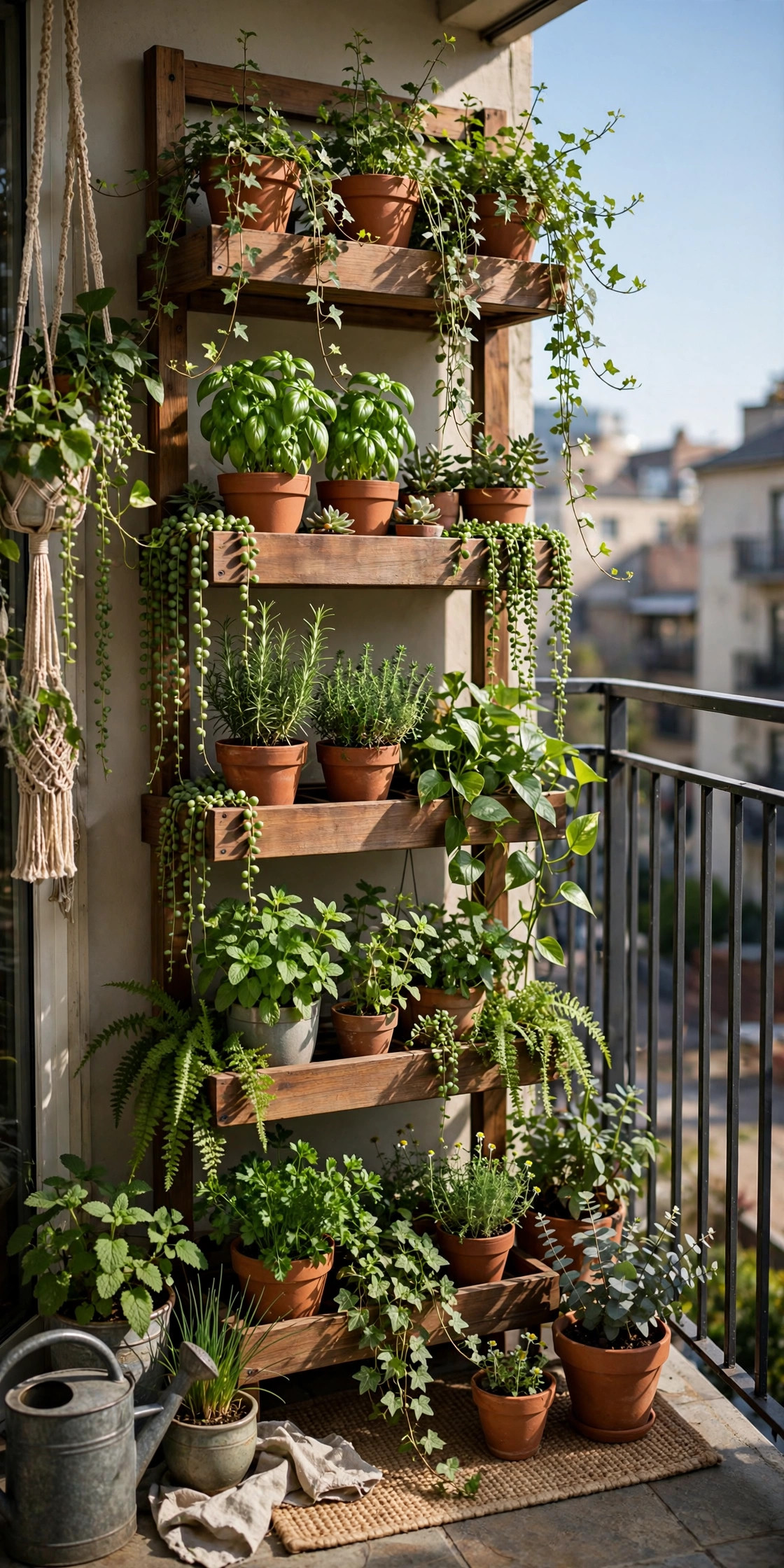
Go Vertical: Shelves, Rails, and Hanging Planters
When floor space runs out, garden upward. A simple ladder shelf against the wall can hold a dozen herb pots in the footprint of one. Wall-mounted planters, hanging baskets, and railing boxes turn blank surfaces into growing space. Climbing plants are the balcony’s best friends: a cucumber or pole beans on a slim trellis, sweet peas twining up strings, or a trailing pothos spilling from a high shelf.
Vertical gardening also creates privacy. A trellis of beans or a curtain of hanging plants softens the view of neighboring buildings and makes your balcony feel like a hidden garden room. Just secure everything firmly — wind is stronger a few floors up, and a falling pot is nobody’s friend. Check that your building’s rules allow railing planters, and fasten them on the inside of the railing where you can.
Pick Plants That Thrive in Pots
Not every plant loves container life, but many of the most rewarding ones do. Herbs are the natural first choice: basil, rosemary, thyme, parsley, chives, and mint (in its own pot — it will happily evict its neighbors) all flourish on balconies and earn their keep at dinner time. Cherry tomatoes are the star vegetable for pots, bred compact varieties especially so, and strawberries in a hanging basket are both pretty and delicious.
- For sunny balconies: cherry tomatoes, peppers, lavender, geraniums, and most herbs.
- For part shade: lettuce, spinach, parsley, begonias, and busy lizzies.
- For shady balconies: ferns, hostas in pots, mint, and leafy salad mixes.
- For beauty plus scent: jasmine on a small trellis, scented geraniums, and night-scented stock near your chair.
Mix one taller plant, some mid-height fillers, and a trailer to spill over the edge, and even three pots together look like a designed garden.
A Simple Watering and Feeding Routine
Pots live or die by your watering can. They cannot send roots deep in search of moisture, so on hot or windy days a balcony garden may need water every morning. Water slowly until it runs from the drainage holes, then empty saucers after half an hour. Self-watering pots and simple drip kits are worth considering if you travel or forget — they are the difference between a holiday and a homecoming to crispy plants.
Container soil also runs out of food faster than garden soil. Add a slow-release fertilizer at planting, then feed flowering and fruiting plants with a diluted liquid feed every week or two in the growing season. Use a good peat-free potting mix rather than garden soil, which compacts in pots. Refresh the top layer of compost each spring, and your little garden will thank you with growth all season long.
Frequently Asked Questions
How much sun does a balcony garden need?
It depends on what you grow. Tomatoes, peppers, and most flowering plants want six or more hours of direct sun. Herbs and leafy greens manage well with three to five, and ferns, mint, and salad leaves are content in bright shade. Match the plant to the light you have rather than fighting it, and almost any balcony can grow something delicious.
What are the easiest vegetables to grow on a balcony?
Cherry tomatoes top the list, followed by salad leaves, radishes, spring onions, and compact peppers. Herbs like basil, chives, and parsley are nearly foolproof in pots. Choose varieties described as dwarf, patio, or compact on the label — they are bred to stay a sensible size while still producing well.
How do I stop my pots from drying out so fast?
Use bigger pots, group them together so they shade each other’s soil, and mulch the surface with small stones or bark. Water in the morning, slowly and deeply. For holidays, self-watering pots, drip spikes, or a kind neighbor with a watering rota will keep everything alive until you return.
Is a balcony strong enough for lots of pots?
Most balconies handle a reasonable garden easily, but be sensible: wet soil is heavy. Spread weight toward the edges near supporting walls, prefer lightweight plastic or fabric pots for large plants, and check your lease or building rules if you are unsure. When in doubt, fewer, bigger pots look better than many small ones anyway.
A balcony garden asks for so little — a few pots, a watering can, ten minutes of attention — and gives back a green room of your own above the city. Start with herbs and one tomato this season, learn your light, and grow from there.