Interior design can feel intimidating when you are starting from zero. There are endless photos online, strong opinions about colors, and furniture in every size and price range. It is easy to buy a few things you like, place them in a room, and wonder why the space still does not feel right. The missing piece is usually not taste. It is a simple order of steps.
This beginner-friendly guide shows you where to start, what to decide first, and how to avoid the most common mistakes. You do not need a huge budget or a design degree. You need to understand how you live, choose a clear direction, and improve one room at a time. By the end, you will have a practical plan you can use in a bedroom, living room, rental, or first home.
Begin With How You Actually Live
Before you look at paint colors or sofas, look at your daily routine. A beautiful room that fights your habits will not stay beautiful for long. Ask simple questions. Where do you read? Where do bags, shoes, keys, and chargers land? Do you host friends, work from the sofa, play with children on the floor, or need a quiet corner to reset?
Write down the jobs each room must do. A living room might need conversation seating, book storage, hidden clutter control, and reading light. A bedroom might need calm color, bedside storage, and space to dress. Clear function makes later choices easier.
Notice What Already Works
You probably do not need to start from nothing. Keep a list of what you already own and honestly mark each item as keep, move, repair, or replace. A good rug might be in the wrong room. A plain chair might become lovely with a cushion. A bookcase may work better in the hallway. Beginners often save money by using what they have in smarter places.
Choose a Direction Before You Shop
Every room needs a simple direction, even if you cannot name a formal style. Collect a small group of inspiration photos and look for patterns. Do you keep choosing warm wood and soft white? Clean lines and black accents? Blue, green, and coastal light? Your eye is telling you something. Turn those patterns into three words, such as calm, warm, and natural, or fresh, simple, and colorful.
Those three words become your filter. When you see a cushion, lamp, or chair, ask whether it matches the words and the way the room will be used. This prevents random purchases and helps different pieces feel connected. It also gives you permission to say no to lovely items that belong in someone else’s home.
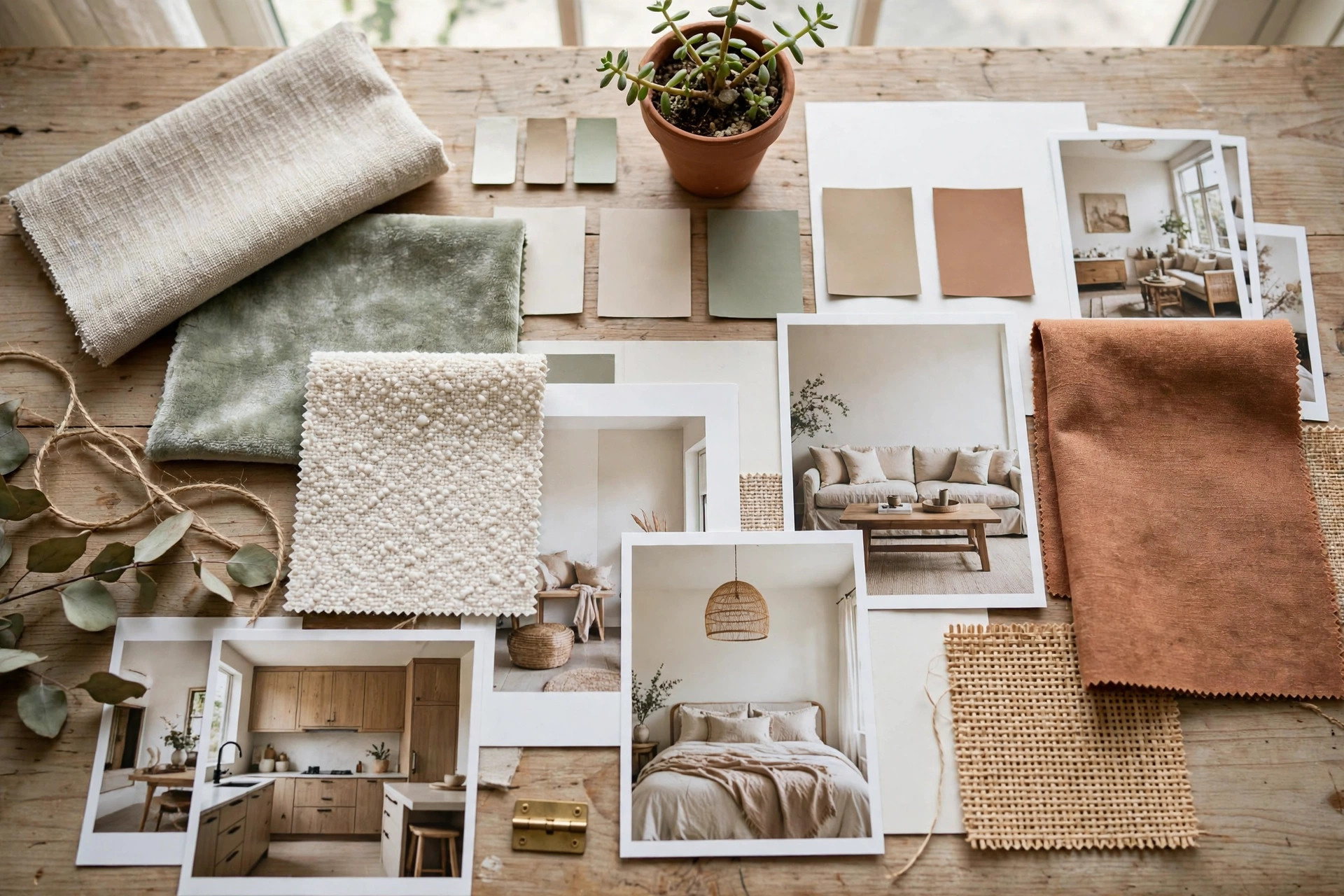
Create a Simple Room Palette
Pick two or three main colors and one accent. A safe beginner formula is a light neutral for walls and large pieces, a medium color for depth, and a stronger accent in small doses. Repeat each color at least twice in the room so it looks intentional. If everything is a different color, the room feels restless. If everything matches exactly, it can feel flat.
Plan the Layout on Paper First
Layout is the backbone of interior design. Start with measurements: room length and width, door swings, windows, outlets, and heating vents. Sketch the room on paper or use a free room-planning tool. Place the largest pieces first, such as the bed, sofa, dining table, or desk. Then add chairs, side tables, storage, and lamps.
Leave clear walking paths and avoid pushing every piece against the walls. In a living room, bring seating close enough for conversation. In a bedroom, make sure you can walk around the bed and open drawers comfortably. Good layout is invisible when it works; people simply feel at ease. If a room feels awkward, rearrange before you buy anything new. Sometimes moving a rug or turning a chair unlocks the whole space.
You do not decorate a room all at once. You make a series of small, clear decisions that support the life you want to live there.
Buy in the Right Order
Beginners often buy accessories first because they are cheap and fun. Then the expensive basics do not match. A better order is paint and flooring decisions, large furniture, rugs, lighting, storage, window coverings, and finally art and accessories. This order keeps proportions and colors consistent.
Start with the biggest and most-used piece in the room. In a bedroom, that is the bed and mattress. In a living room, it is usually the sofa. Choose comfort and size before decorative details. Next, select a rug large enough to anchor the furniture. Many rooms look unfinished because the rug is too small. Then add lighting at different heights so the room works in the evening, not just in daylight.
Spend Smart, Not All at Once
Spend more on items you touch every day and less on trends. A supportive chair, good bedding, and a durable rug are worth patience. Save on side tables, frames, baskets, and seasonal accents. Buying slowly also lets you live in the room and discover what it truly needs instead of filling every corner in one weekend.
Add Personality in Layers
Once the basics work, add the layers that make a room feel like yours. Hang art at eye level, not near the ceiling. Group smaller frames together if one piece feels too tiny for the wall. Add books, plants, textiles, and objects you genuinely like. A room becomes personal through these details, not through expensive labels.
Use texture to keep the space warm. Combine smooth, rough, soft, and shiny surfaces in small amounts, then repeat materials quietly: wood in a frame and side table, brass in a lamp and drawer pull. Leave some breathing space so favorite pieces stand out.
Frequently Asked Questions
What is the first thing a beginner should do in interior design?
Decide how the room will be used and measure it. Function and size should guide every later choice. Once you know the job of the room and what fits, choosing furniture, color, and layout becomes much simpler.
How do I find my interior design style?
Save photos of rooms you like and look for repeated colors, materials, and shapes. Describe the pattern in three words and use those words as a shopping filter. Your style becomes clearer as you compare real choices, not labels.
Should I design one room or the whole home at once?
Start with one room, ideally the one you use most. A finished-feeling room teaches you what you like and gives you confidence. Carry a few colors or materials into the next room so the home feels connected.
What is the most common beginner mistake?
Buying small decorative items before the layout, lighting, and large pieces are settled. Another common mistake is choosing a rug that is too small. Fix the foundation first, and accessories will fall into place.
Interior design is not about copying a perfect photo. It is about making your everyday life easier and more beautiful. Start with function, choose a direction, plan the layout, buy in order, and add personality slowly. Room by room, your home will begin to feel clear, comfortable, and truly yours.