The living room is the heart of the home — where family gathers, friends are welcomed, and quiet evenings unfold. Yet it’s also one of the hardest rooms to get right, because it has to do so many jobs at once: comfortable, beautiful, practical, and personal. Whether you’re starting from scratch or refreshing a tired space, these ten ideas will help you create a living room that feels both beautiful and genuinely comfortable to live in.
1. Plan Your Layout Around Conversation
Great living rooms are designed for people, not just for furniture. Start by arranging seating so people can talk easily — chairs and sofas should face each other (or at least angle toward each other) with no more than about 2.5 meters between them. A coffee table in the middle anchors the arrangement and gives everyone a place to set a drink.
Resist the common urge to push everything against the walls. Pulling furniture even 15–20 cm away from the walls creates a sense of intimacy and makes the room feel larger, not smaller. If your room is long and narrow, create two zones — for example, a main seating area at one end and a reading nook with a single armchair at the other.
- Keep walkways at least 75 cm wide so movement feels easy
- Angle at least one chair toward the sofa for a welcoming feel
- Float the rug under the front legs of all seating to unify the zone
2. Choose a Sofa You’ll Actually Love Sitting On
The sofa is the hardest-working piece in the room, so choose comfort first and looks second — though the best sofas deliver both. Sit on it before you buy: seat depth around 55–60 cm suits most people for lounging, while firmer cushions hold their shape longer. Removable, washable covers are a lifesaver in homes with kids or pets.
In terms of style, a clean-lined sofa in a versatile neutral (warm gray, oatmeal, soft beige) gives you freedom to change cushions and throws with the seasons. If you crave color, a deep green or navy velvet sofa can be absolutely stunning as the room’s anchor — just keep the surrounding palette calm so it shines.
3. Layer Lighting at Different Heights
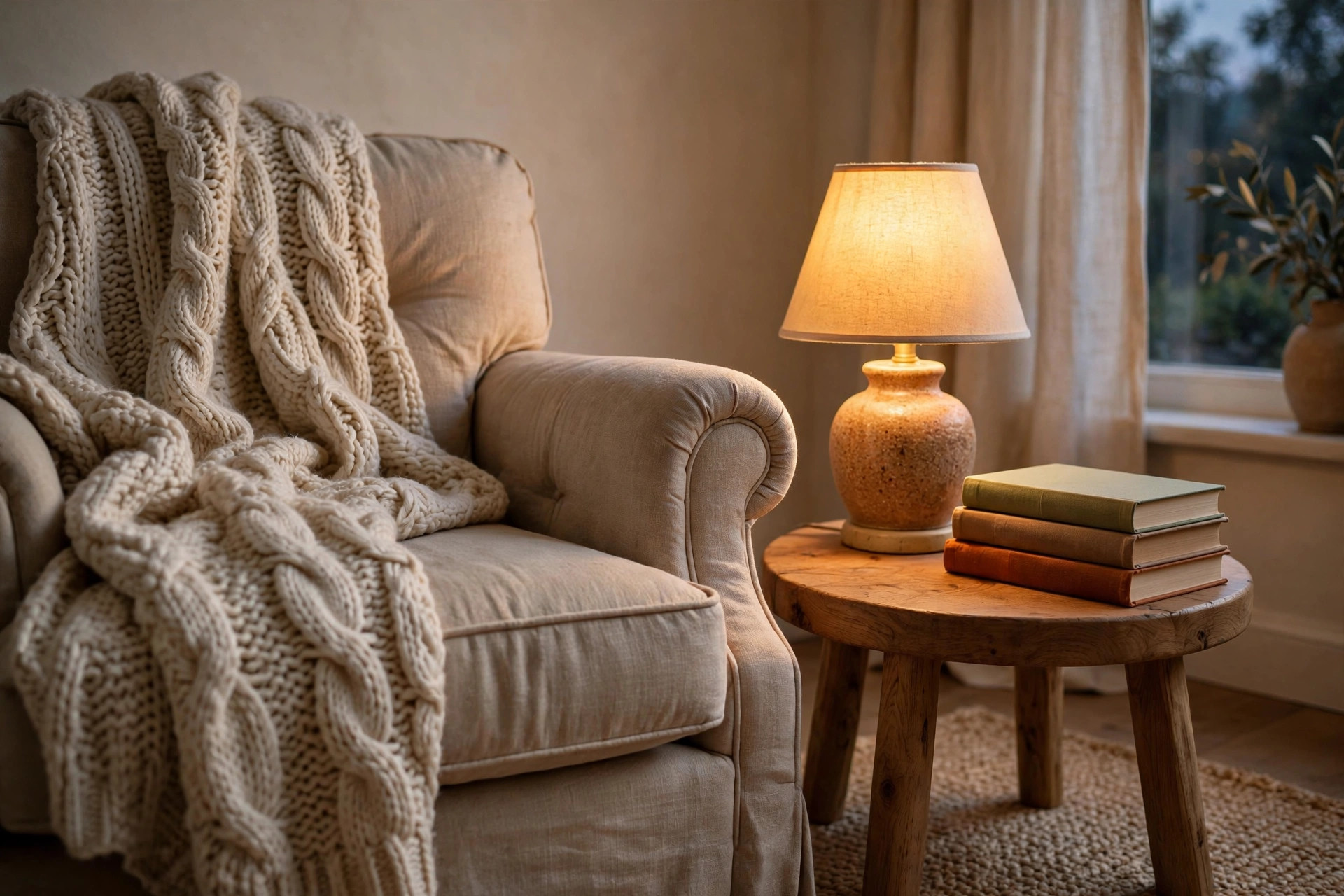
A single ceiling light flattens a living room. Aim for light at three heights: overhead (a pendant or chandelier on a dimmer), mid-level (table and floor lamps at 120–150 cm), and low accents (candles, fairy lights, or a small glowing lamp on a shelf). This layering creates depth and lets you shift the mood from bright daytime to cozy evening.
Place a floor lamp beside your favorite reading chair and table lamps on side tables at each end of the sofa. Warm bulbs (2700K) keep everything feeling golden and relaxed. If you have art on the walls, a small picture light above it adds a gallery-like touch that elevates the whole room.
4. Anchor the Room With the Right Rug
A rug that’s too small is one of the most common living room mistakes — it makes even expensive furniture look scattered. As a rule, the rug should be large enough that at least the front legs of the sofa and chairs rest on it. In most living rooms, that means 200×290 cm or larger.
Pattern is your friend in a high-traffic room: it hides wear and adds personality. A vintage-style rug with warm tones works in almost any scheme, while a natural jute or wool rug adds texture to minimalist spaces. If you have pets, choose a low-pile, easy-clean rug — you’ll thank yourself daily.
5. Build a Gallery Wall With Confidence
Blank walls make a living room feel unfinished, and a gallery wall is the most personal way to fill them. Mix framed photos, art prints, and small objects like woven pieces or mirrors. Lay the arrangement out on the floor first, then transfer it to the wall — start with the largest piece slightly off-center and build outward.
Keep frames in two or three finishes maximum (for example, black + oak + brass) for a curated look, and hang the center of the arrangement at eye level, around 145 cm from the floor. If a full gallery feels daunting, one oversized piece of art — at least two-thirds the width of the sofa — makes an equally strong statement.
6. Add Greenery for Instant Life
Few things transform a living room as quickly as plants. A tall fiddle-leaf fig or olive tree fills an empty corner with sculptural beauty, while trailing pothos on a bookshelf softens hard lines. Even one or two well-chosen plants make a room feel cared for and alive.
Match plants to your light: bright indirect light suits most popular houseplants, while low-light corners do fine with snake plants or ZZ plants. Group plants in odd numbers and vary their heights for a natural, collected look. And don’t forget the pots — beautiful planters in ceramic, terracotta, or woven baskets are decor in their own right.
- Bright rooms: fiddle-leaf fig, monstera, olive tree
- Medium light: pothos, philodendron, peace lily
- Low light: snake plant, ZZ plant, cast iron plant
7. Mix Textures to Create Warmth
A room done entirely in smooth, flat surfaces feels cold no matter how pretty it is. Warmth comes from contrast: nubby against sleek, soft against hard. Drape a chunky knit throw over a leather chair, pair a smooth marble coffee table with a shaggy rug, or add linen cushions to a velvet sofa.
Natural materials are texture powerhouses — wood, rattan, wool, stone, and clay each bring their own character. A woven basket for blankets, a wooden bowl on the coffee table, or a stone side table adds an organic layer that makes the room feel collected over time rather than decorated all at once.
8. Create a Focal Point Worth Looking At
Every comfortable living room has a natural place for the eye to rest. A fireplace is the classic anchor — style the mantel with a mirror or art above it and a few curated objects. No fireplace? A large window with beautiful curtains, a striking piece of art, or a media wall designed with floating shelves can serve the same purpose.
Once you have a focal point, arrange furniture to honor it rather than fight it. The common mistake is making the TV the only focal point by default — if the television dominates, consider mounting it above a console styled with books and objects, or hiding it in a cabinet, so the room still feels designed when the screen is off.
A living room should invite you to sit down the moment you walk in. If it doesn’t, the layout — not the decor — is usually the problem.
9. Make Storage Beautiful
Clutter kills comfort faster than any design flaw. The trick is storage that looks like decor: a handsome ottoman that opens for blankets, built-in shelving styled with books and objects, or a vintage trunk as a coffee table. Every item in the room should have a place to go when guests arrive unexpectedly.
Bookshelves deserve special attention — they’re often the messiest spot in the room. Style them with roughly two-thirds books and one-third decorative objects, leaving some empty space so shelves can breathe. Baskets on lower shelves hide games, cables, and kids’ toys elegantly.
10. Finish With Personal, Seasonal Touches
The difference between a showroom and a home is personality. Display the things that tell your story: travel souvenirs, family photos, a handmade piece from a local market. These don’t need to be expensive — they need to be meaningful. Rotate small items seasonally to keep the room feeling fresh: lighter textiles in summer, richer tones and candles in winter.
Scent matters more than people realize. A signature candle or diffuser — cedar and amber for coziness, citrus and herbs for freshness — makes the room feel complete. And never underestimate fresh flowers: a simple bunch of seasonal stems on the coffee table is the fastest, cheapest luxury there is.
Frequently Asked Questions
How do I arrange furniture in a small living room?
Choose fewer, better-scaled pieces: a loveseat instead of a full sofa, one armchair instead of two, and a round coffee table that eases traffic flow. Use the walls vertically with tall shelving, keep the palette light, and let one statement piece (art or a rug) do the heavy lifting so the room feels intentional, not cramped.
What colors make a living room feel cozy?
Warm neutrals — cream, warm gray, greige, caramel — create instant coziness, especially when layered with texture. Deep accent colors like forest green, terracotta, or navy add richness without overwhelming. The coziest rooms usually share a warm undertone across walls, textiles, and wood finishes.
Should the sofa match the armchairs?
Not necessarily — in fact, matching sets can look flat. A more designer approach is to coordinate rather than match: keep one element consistent (like the color family or leg style) while varying the rest. For example, a beige sofa pairs beautifully with two patterned or leather armchairs.
How much should I spend on a living room refresh?
It depends on scope, but a meaningful refresh is very doable on a modest budget if you prioritize well. Spend the most on the pieces you touch daily (sofa, rug), save on decor and textiles, and consider paint — it’s the cheapest transformation per dollar in any room. Thrifted and secondhand finds can add character money can’t buy.
Bringing It All Together
A beautiful, comfortable living room isn’t about perfection — it’s about a space that welcomes you at the end of the day and invites others in. Start with layout and lighting, invest in comfort where it counts, then layer in texture, greenery, and the personal touches that make it unmistakably yours. Change doesn’t have to happen all at once; even one weekend project from this list will make the room feel renewed.