You don’t need a sprawling backyard to enjoy a beautiful garden. Some of the most delightful gardens in the world fit on balconies, windowsills, and tiny patios. Gardening is really about one simple pleasure: nurturing living things and watching them thrive. Whether you have acres or just a sunny corner, these ideas will help you create a green space that brings you joy every single day.
1. Start Small and Learn as You Grow
The number one mistake new gardeners make is starting too big. A huge bed full of unfamiliar plants quickly becomes overwhelming, and neglected gardens discourage rather than delight. Begin with a single raised bed, a few containers, or one sunny border — small enough to tend in 20 minutes a couple of times a week.
Choose forgiving, fast-rewarding plants for your first season: herbs, salad greens, marigolds, and cherry tomatoes all grow quickly and tolerate beginner mistakes. Success with easy plants builds the confidence (and the habit) that carries you into more ambitious projects next year. Gardening is a skill learned by doing, not by planning perfectly.
- Herbs (basil, mint, parsley) — nearly indestructible and endlessly useful
- Cherry tomatoes — heavy producers that forgive irregular watering
- Marigolds and zinnias — cheerful flowers from the easiest seeds
- Lettuce and radishes — harvestable within weeks of sowing
2. Make the Most of a Small Balcony or Patio
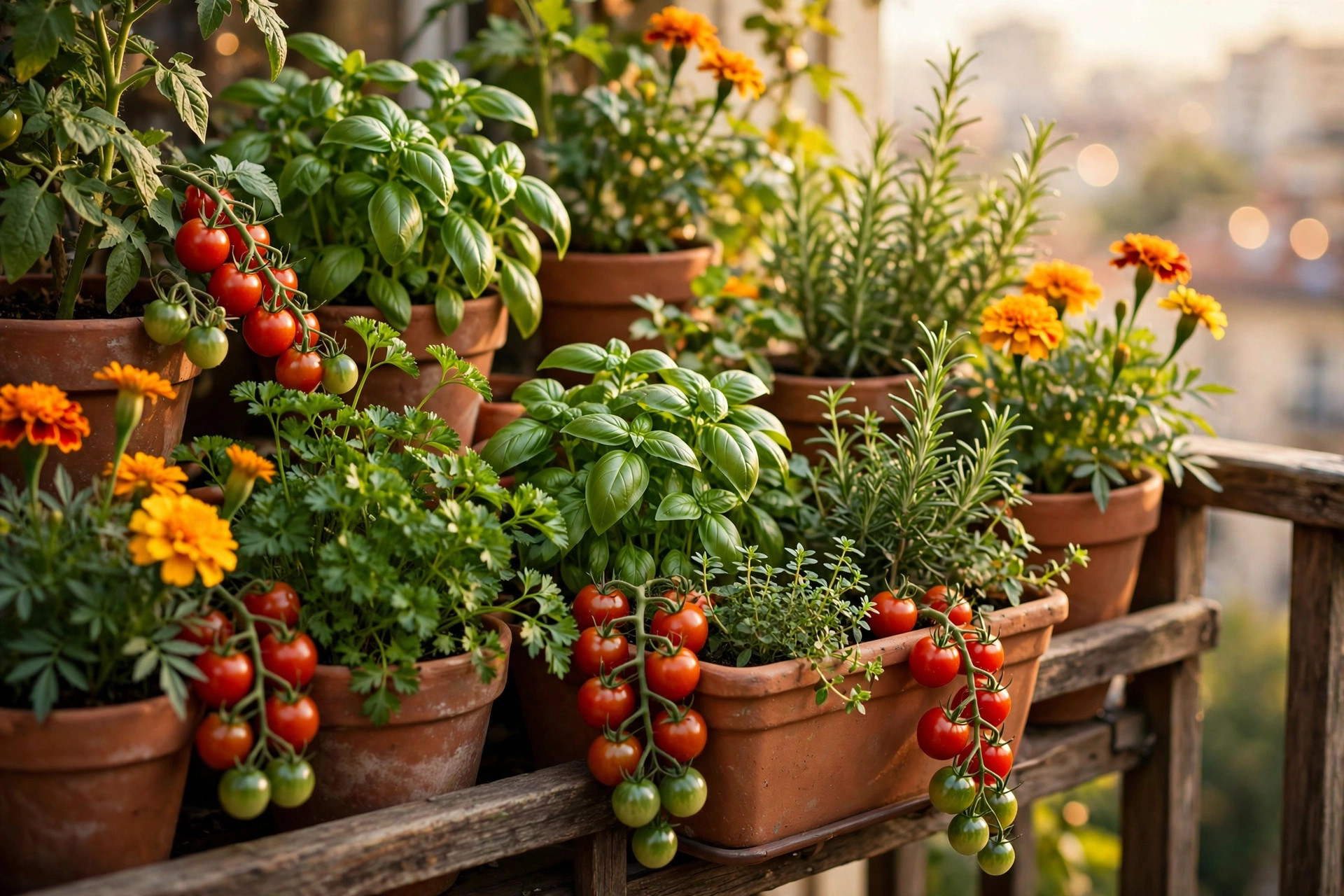
Small-space gardening is all about thinking vertically. Wall-mounted planters, railing boxes, tiered stands, and hanging baskets multiply your growing area without using a centimeter of floor. A 2×3 meter balcony can hold dozens of plants when you build upward — herbs at railing height, flowers on the walls, and trailing plants spilling from above.
Choose containers wisely: larger pots hold moisture longer and give roots room, which means healthier plants and less watering. Self-watering planters are worth every penny for busy people. And remember weight limits — wet soil is heavy, so check your balcony’s capacity and favor lightweight fiberglass or fabric pots over stone.
3. Grow Food You Actually Love to Eat
There’s nothing quite like the taste of a tomato you grew yourself, still warm from the sun. A kitchen garden doesn’t need to feed a family — even a few pots of herbs by the door will change how you cook. Start with what you buy most often: if that’s salad, grow cut-and-come-again lettuce; if it’s herbs, a small herb collection pays for itself in weeks.
Interplant flowers among your vegetables — marigolds, nasturtiums, and calendula attract pollinators and beneficial insects while looking gorgeous. This companion approach means your veggie patch doubles as an ornamental bed. And don’t overlook fruit: strawberries in hanging baskets, a dwarf lemon tree in a pot, or raspberries along a fence all produce abundantly in small footprints.
4. Create Layers Like Nature Does
The most beautiful gardens mimic nature’s structure: tall canopy plants at the back, mid-height shrubs and perennials in the middle, and low groundcovers at the front. This layering creates depth and a lush, established feel even in a brand-new garden. A bare fence becomes a backdrop; a flat bed becomes a landscape.
In practice: place a small ornamental tree or tall grasses at the rear, fill the middle with flowering perennials like echinacea, lavender, and salvias, and edge the front with low plants like creeping thyme or alyssum. Repeat plant varieties in drifts of three, five, or seven rather than dotting single plants about — repetition is what makes gardens look designed.
5. Choose Plants Suited to Your Conditions
The secret of effortless gardens isn’t a green thumb — it’s putting the right plant in the right place. Observe your space first: how many hours of direct sun does each area get? Is the soil sandy or clay? Does water pool after rain? Then choose plants proven to thrive in those exact conditions rather than fighting nature.
Native plants are the ultimate low-effort choice — they’re adapted to your climate, need less water once established, and support local pollinators and birds. Your local nursery (not a big-box store) is the best source of advice on what truly thrives in your area. A plant that’s happy where it’s planted needs a fraction of the care of one that’s merely surviving.
6. Add Water for Sound and Serenity
Moving water transforms a garden’s atmosphere. The gentle sound of a small fountain masks traffic noise, attracts birds, and creates a meditative focal point. You don’t need plumbing — solar-powered fountain pumps sit in any watertight container, from a ceramic pot to a half-barrel, and run happily on sunshine.
Even simpler: a shallow birdbath with fresh water brings delightful wildlife to any garden. Place it where you can see it from your favorite window or seat. Keep water features in partial shade to slow algae, and change birdbath water every few days in summer.
7. Light It Up for Evening Magic
Gardens shouldn’t disappear at sunset. A few well-placed solar lights along a path, string lights draped through a tree, or lanterns on a patio table extend your garden’s hours deep into the evening. Warm white light (not blue-white) keeps the mood natural and firefly-like.
Uplight a beautiful tree or architectural plant for drama — one spotlight aimed up through foliage creates stunning shadows. And consider where you view the garden from: lighting the areas visible from your living room windows effectively doubles your enjoyment, turning the garden into evening art.
- Solar path lights — stake along walkways, no wiring needed
- String lights — drape through trees or along fences for instant festivity
- Lanterns with LED candles — safe, windproof, endlessly rearrangeable
8. Build Healthy Soil First
Everything in gardening comes back to soil. Plants in rich, living soil resist pests, need less fertilizer, and simply grow better. The single best thing you can do is add compost — a 5 cm layer worked into beds each spring feeds the soil food web that feeds your plants. You can make your own from kitchen scraps and garden waste, or buy it by the bag.
Mulch is soil’s best friend: a layer of bark, straw, or shredded leaves suppresses weeds, retains moisture, and slowly feeds the earth as it breaks down. Avoid the temptation of synthetic fertilizers as a shortcut — they feed plants but starve soil. Healthy soil is a long game, and it pays compound interest.
Gardeners don’t grow plants — they grow soil, and the soil grows the plants. Get the ground right and everything else gets easier.
9. Welcome Pollinators and Wildlife
A garden buzzing with bees and fluttering with butterflies is a garden that’s working. Dedicate even a small patch to pollinator-friendly flowers — single-petaled blooms like coneflowers, bee balm, cosmos, and lavender offer accessible nectar that fancy double flowers often lack. Avoid pesticides entirely; a balanced garden with diverse plantings largely polices its own pests.
Add habitat, not just food: a small pile of logs in a shady corner shelters beetles and hedgehogs, a patch of bare earth gives solitary bees somewhere to nest, and a dense shrub offers birds safe cover. You’ll be rewarded with a garden that feels alive in the most literal sense.
10. Create a Spot to Sit and Savor It
Here’s the idea most garden plans forget: all this beauty needs an audience — you. Carve out at least one comfortable place to sit within your garden: a bench under a tree, two chairs on the patio, even a single stool among the beds. Position it to catch morning sun or evening shade, whichever you prefer.
Make it inviting enough that you’ll actually use it: an outdoor cushion, a small side table for your coffee, perhaps a throw for cool evenings. Gardens are for lingering, not just for working in. The five quiet minutes you spend among your plants each morning may become the best part of your day.
Frequently Asked Questions
I’m a complete beginner. What should I plant first?
Start with herbs (basil, mint, chives) and fast vegetables (radishes, lettuce, cherry tomatoes), plus a few foolproof flowers like marigolds or zinnias. These all germinate reliably, grow quickly, and tolerate the mistakes every beginner makes. Success in year one matters more than ambition.
How much sun does a garden need?
Most vegetables and flowering plants want at least 6 hours of direct sun daily. Leafy greens and many herbs manage with 3–4 hours. Before planting, track the sun across your space for a day — morning sun with afternoon shade is actually ideal in hot climates, as it protects plants from scorching.
Can I garden if I only have shade?
Absolutely — shade gardening is its own beautiful specialty. Hostas, ferns, astilbe, and hydrangeas thrive without direct sun, and shade gardens have a lush, woodland serenity that’s hard to beat. Even deep shade suits mosses and shade-tolerant groundcovers. Work with what you have rather than fighting it.
How do I keep pests away without chemicals?
Diversity is your defense: mixed plantings confuse pests, while flowers like marigolds and nasturtiums repel or trap them. Encourage predators — birds, ladybugs, and frogs eat astonishing quantities of pests. Hand-pick larger culprits, use row covers on vulnerable crops, and accept a little nibbling as the price of a living garden.
Bringing It All Together
A beautiful garden isn’t measured in square meters — it’s measured in the pleasure it gives you. Start small, plant what you love, feed your soil, and always leave yourself a chair in the middle of it all. Whether your garden is a windowsill of herbs or a backyard of abundant beds, the simple act of tending living things will reward you far beyond the effort. Happy growing.