Your home should feel like a warm hug at the end of a long day — a place that reflects who you are and makes everyday life a little more beautiful. The good news is that you don’t need a big budget or a design degree to get there. With a few simple, thoughtful changes, any room can feel fresher, cozier, and more put-together. Here are ten simple home decor ideas that work in real homes, from tiny apartments to spacious family houses. Each one is easy to try this weekend, and together they’ll completely change how your home looks and feels.
1. Start with a Declutter and Deep Clean
Before you buy a single new thing, take everything off your surfaces and give your home a proper reset. Go room by room with three boxes labeled keep, donate, and toss, and be honest about what you actually use and love. Wipe down shelves, wash the windows, and vacuum under the furniture — you’d be amazed how much brighter a room feels when it’s truly clean. Decluttering costs nothing, yet it instantly makes your existing decor look intentional. Think of it as giving your home a blank canvas.
2. Rearrange Your Furniture
You don’t need new furniture to get a new look — just move what you have. Try floating your sofa away from the wall, angling a chair toward the window, or swapping pieces between rooms; that bedroom armchair might be perfect in the living room. Identify your room’s focal point — a fireplace, big window, or TV — and arrange seating around it, leaving clear three-foot walkways so the room flows. Photograph the room first to compare, and try two or three layouts before settling.
3. Layer in Soft Textiles
Textiles are the fastest way to add warmth and personality. Drape a chunky knit throw over the sofa arm, mix throw pillows in different sizes and textures, and lay down a rug that anchors your seating area — the front legs of furniture should sit on it. Hang curtains higher and wider than the window to make the room feel taller. Stick to three or four colors repeated around the room so everything feels connected. Even one new cushion cover can shift the whole mood.
4. Play with Lighting
Good lighting changes everything, and most homes simply don’t have enough of it. Aim for three layers in each main room:
- Ambient light — your ceiling fixture or general overhead glow.
- Task light — a reading lamp by the sofa or a desk lamp where you work.
- Accent light — candles, fairy lights, or a small lamp on a shelf.
Swap harsh white bulbs for warm ones (2700K is a cozy sweet spot) and tuck lamps into dark corners. A dimmer switch or a couple of smart bulbs lets you shift from bright daytime energy to a soft evening glow. Suddenly the same room feels calm, welcoming, and far more expensive than it really is.
5. Add Greenery
Plants breathe life into a room — literally. A tall plant in an empty corner, a trailing pothos on a bookshelf, or a cluster of small succulents on a windowsill adds color, texture, and freshness that no decor item can match. If you’re new to plants, start with forgiving varieties like snake plants, pothos, or ZZ plants, which thrive on a little neglect. Group plants in odd numbers and vary their heights for a natural, collected look. No green thumb? Today’s high-quality faux plants look remarkably real and still deliver that lush, lively feeling.
6. Create a Gallery Wall
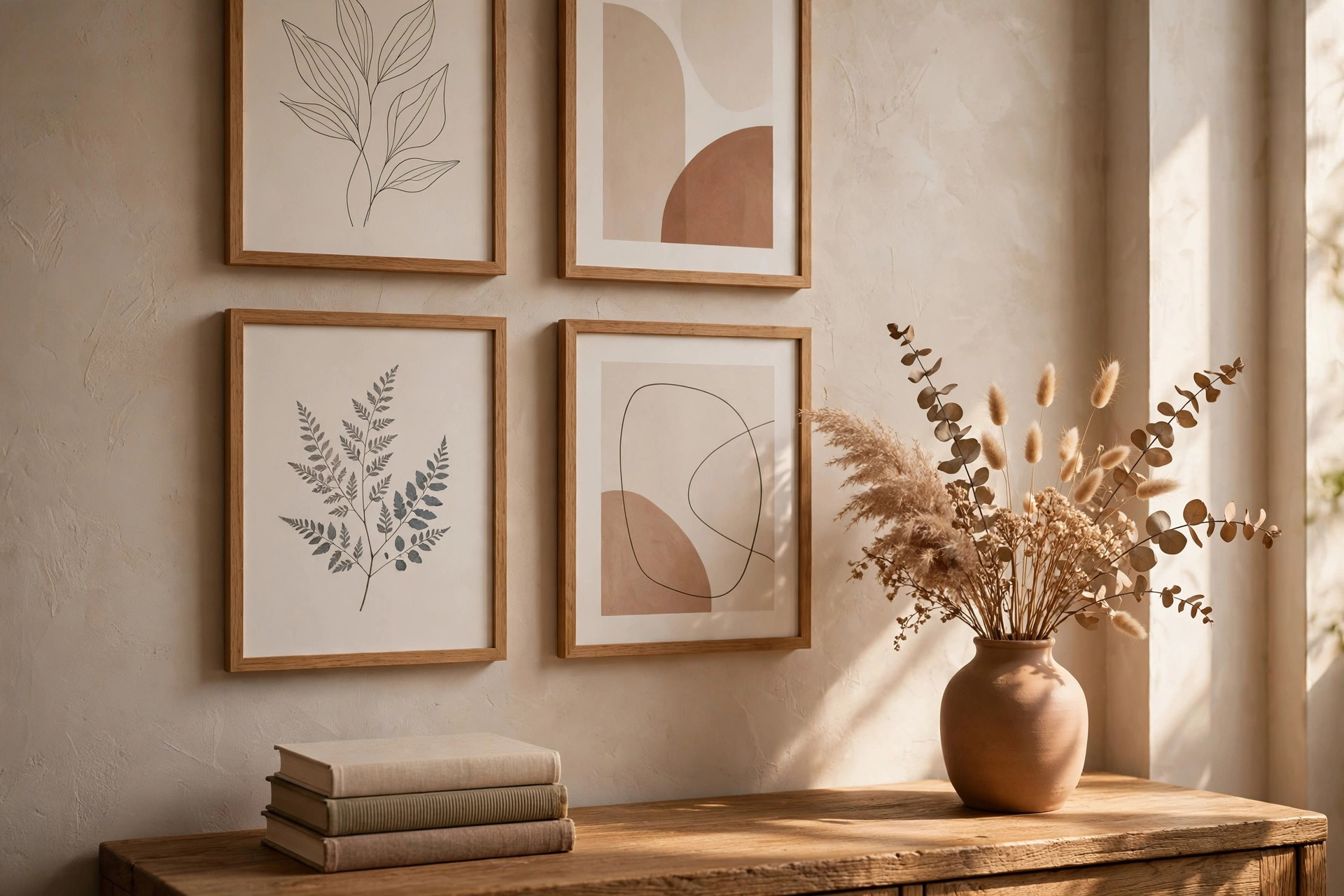
A gallery wall turns blank space into a personal statement. Gather frames you already own — they don’t need to match, since a mix of sizes and finishes looks curated and relaxed. Lay the arrangement on the floor first, starting with the largest piece in the center and building outward, keeping two to three inches between frames. Mix art prints with photos, a mirror, or a woven wall hanging for texture. Hang the center of the arrangement at eye level, about 57 inches from the floor, for a professional gallery feel.
7. Use Mirrors to Open Up Space
Mirrors are a decorator’s secret weapon for small or dark rooms. A large mirror placed opposite a window bounces natural light deep into the space and can make a room feel twice as big. Lean an oversized mirror against the wall for a relaxed, modern look, or group smaller mirrors in an interesting arrangement. In entryways, a mirror above a console table is both practical and pretty. Just be mindful of what the mirror reflects — aim it at something lovely like a plant or a piece of art rather than at clutter.
8. Style Your Shelves and Surfaces
Styled shelves look effortless, but there’s a simple formula behind them. Group items in threes, mixing heights and textures — a stack of books, a small plant, and a candle, for example. Leave some breathing room; not every inch needs to be filled. Vary the shapes on display: something tall, something round, something flat. Step back and squint — if one side feels heavy, shift things until the balance feels right. Use the same thinking on coffee tables and mantels: a tray that corrals small items instantly makes a surface look styled rather than scattered.
9. Bring in Natural Textures
Rooms that feel flat are often just missing texture. Natural materials — wood, rattan, jute, linen, and stone — add warmth and depth that make a space feel layered and inviting. Try a woven basket for your throws, a jute rug underfoot, linen cushion covers, or a wooden tray on the coffee table. You don’t need much; even two or three natural pieces will soften a room full of smooth, modern surfaces. As a bonus, natural textures pair beautifully with houseplants, doubling that fresh, organic feeling throughout your home.
10. Add a Signature Scent and Finishing Touches
The final layer of a beautiful home is one you can’t see: scent. Choose a signature fragrance — a candle, a reed diffuser, or an essential oil blend — and use it consistently so your home always smells welcoming. Then add small finishing touches: fresh grocery-store flowers, a pretty tray on the ottoman, coasters that actually get used. These tiny details signal care, and they’re what guests remember most. Beautiful homes aren’t about perfection; they’re about feeling loved and lived in.
Frequently Asked Questions
How can I decorate my home on a small budget?
Start with the free changes: declutter, deep clean, and rearrange your furniture. Then focus on high-impact, low-cost updates like new cushion covers, a fresh coat of paint on one wall, thrifted frames for a gallery wall, and affordable plants. Simply styling what you already own in a new way often makes the biggest difference of all.
What is the easiest room to start decorating?
The living room is usually the best starting point because it’s the space you — and your guests — use most. Improvements there are immediately visible and motivating. Once you love your living room, carry the same colors and style into the bedroom or entryway so the whole home feels connected.
How do I choose a color scheme for my home?
Pick one neutral base (white, beige, or soft gray), one main color you love, and one accent for small pops of interest. Repeat these three throughout your home in different proportions. If you’re unsure, look at your wardrobe or a favorite piece of art — the colors you’re naturally drawn to are a great guide.
How often should I refresh my home decor?
There’s no strict rule, but a light seasonal refresh keeps things feeling alive — swap textiles, rearrange a few pieces, and add touches like fresh flowers or scented candles. Bigger updates every few years, such as paint or lighting changes, keep your home evolving along with your taste.
A Beautiful Home Is Built One Small Change at a Time
You don’t need to renovate or spend a fortune to love where you live. Start with one idea from this list this weekend — the declutter, maybe, or the gallery wall — and notice how it shifts the feeling of the room. Then try another. Bit by bit, these simple changes add up to a home that feels truly yours: warm, welcoming, and beautiful every single day.