Interior design can feel intimidating — all those perfect rooms in magazines and feeds make it seem like you need a professional (and a fortune) to get it right. The truth is much friendlier: stylish, comfortable homes are built on a handful of learnable principles, not secret talent. Whether you’re decorating your first apartment or refreshing a family home, these ten interior design ideas will help you create spaces that look polished and feel wonderful to live in.
1. Define Your Style Before You Shop
The biggest design mistake is buying pieces you like individually that don’t work together. Before spending anything, spend an afternoon defining your direction. Browse and save images of rooms you love, then look for patterns: Are they light or moody? Minimal or layered? Do you keep saving warm wood tones, or crisp black-and-white?
Give your style a working name — “warm modern,” “cozy traditional,” “Scandi with color” — and use it as a filter for every purchase. When you’re torn between two items, ask which one fits the style definition better. This single habit prevents the mismatched, “furniture showroom” look more than any other.
- Save 15–20 inspiration images, then identify the 3 colors that repeat most
- Note the materials that appear again and again (oak, brass, linen?)
- Write your style sentence down and keep it on your phone while shopping
2. Follow the 60-30-10 Color Rule
Professional designers rely on this simple formula: 60% of the room in a dominant color (usually walls and large furniture), 30% in a secondary color (curtains, rugs, bedding), and 10% in an accent (cushions, art, small objects). It guarantees balance — enough cohesion to feel calm, enough contrast to feel interesting.
Your 60% should be something you won’t tire of: warm white, soft gray, or a gentle neutral. The 30% is where personality enters — perhaps dusty blue upholstery or terracotta curtains. The 10% accent is your playground: swap it seasonally or whenever you crave change, and the whole room feels refreshed for very little money.
3. Get the Scale Right
Scale — the size of things relative to each other and the room — is the invisible difference between amateur and professional-looking spaces. A tiny rug under a large sofa, art that’s dwarfed by the wall, or a chandelier lost in a high ceiling all signal “off” even when individual pieces are lovely.
Use these reliable guidelines: art above a sofa should span roughly two-thirds the sofa’s width; curtains should hang high and wide (rod 10–15 cm above the frame, extending 8–10 cm each side); coffee tables should be about two-thirds the sofa’s length and sit 35–45 cm away from it. When in doubt, go bigger — undersized pieces are a far more common error than oversized ones.
4. Mix Old and New for Character
Rooms furnished entirely from one store in one season look flat and impersonal. The most stylish homes mix eras: a vintage wooden dresser beside a modern lamp, an antique mirror above a contemporary console. Old pieces add patina and story; new pieces add freshness and function.
You don’t need antiques — “old” can mean thrifted, inherited, or handmade. A grandmother’s vase, a flea-market chair reupholstered in modern fabric, or a handmade ceramic bowl all add the layer of history that makes a room feel collected rather than decorated. Aim for at least two or three pieces with a past in every room.
5. Master the Art of Layering
Layering is what makes a room feel rich and finished. It works at every scale: on a bed (sheets, duvet, throw, cushions), on a coffee table (books, a tray, an object, a plant), on walls (art layered over a mirror or beside sconces). Each layer adds depth that flat, single-note styling lacks.
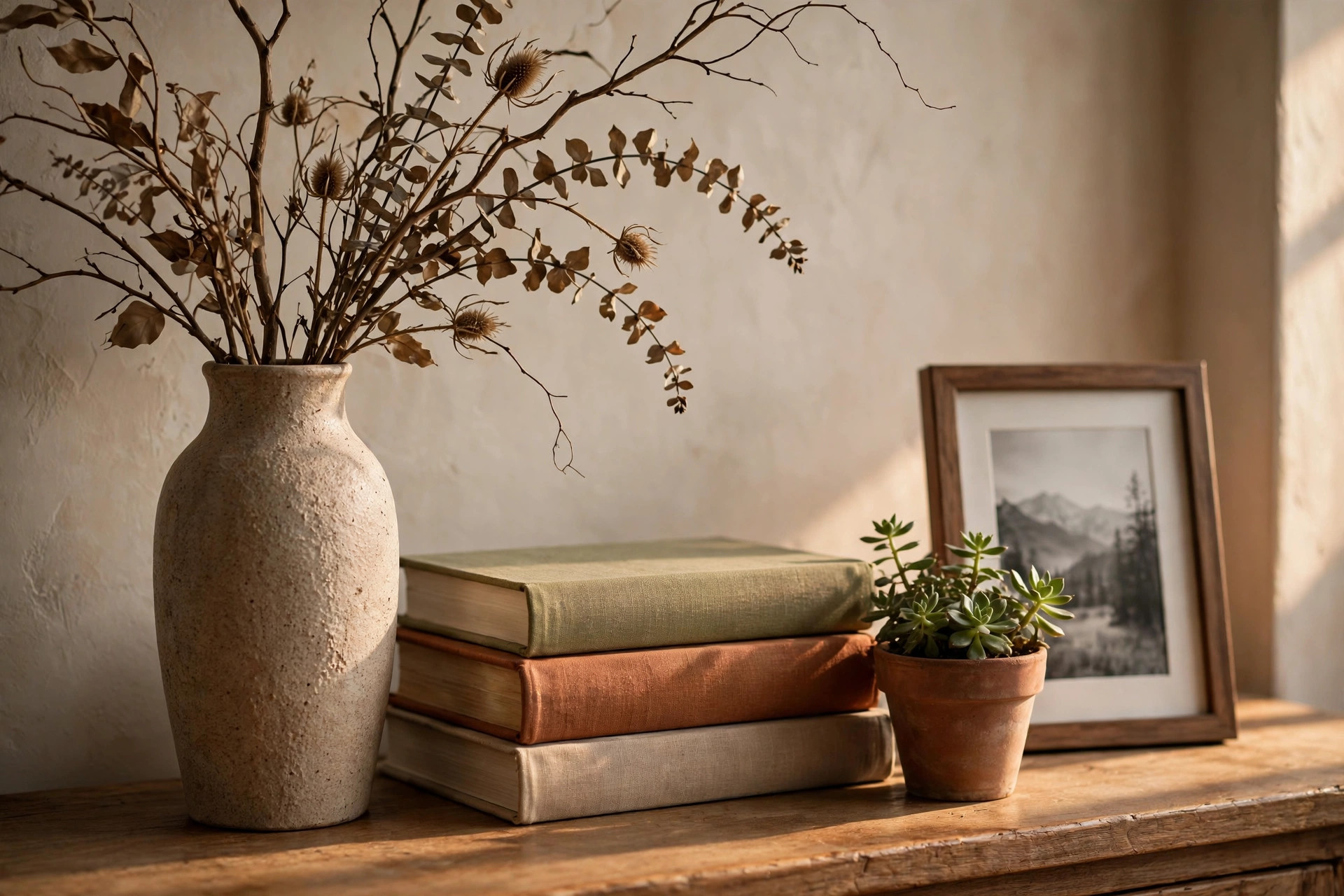
The secret is varying height, texture, and reflectiveness. On a console table, try this formula: something tall (a lamp or vase with branches), something low and horizontal (a stack of books), something organic (a small plant), and something personal (a framed photo). Step back, edit one thing out, and you’re done.
6. Let There Be (Better) Light
Designers obsess over lighting because it literally changes how every color and texture in the room reads. Beyond the basic three layers (ambient, task, accent), pay attention to quality: warm color temperature (2700K), dimmers wherever possible, and shades that diffuse rather than glare.
Statement lighting is also one of the highest-impact style moves available. A sculptural pendant over the dining table or an arc floor lamp in the living room functions as art that also illuminates. And don’t forget natural light — sheer curtains that filter daylight beautifully are worth more than any lamp, so keep windows as unobstructed as practical.
- Dimmers on overhead lights: the cheapest luxury in design
- Lampshades in linen or fabric soften light far better than bare bulbs
- Uplights behind plants create dramatic evening shadows
7. Use Mirrors Strategically
Mirrors are a designer’s multi-tool: they bounce light, double greenery, and make small rooms feel twice their size. The key is placement — a mirror should reflect something worth seeing, like a window view, a pretty light fixture, or a piece of art, not a blank wall or clutter.
A large leaning floor mirror makes a bedroom or hallway feel grand; a round mirror above a console is a timeless entryway move; mirrored trays on coffee tables add sparkle. In dining rooms, a mirror on the wall makes candlelit dinners glow. Just keep them clean — a dusty mirror defeats its own purpose.
8. Ground Every Room With a Rug
Rugs do the quiet heavy lifting of interior design: they define zones, absorb sound, add warmth, and tie furniture together. In open-plan spaces they’re essential — without a rug, seating areas drift and the room feels like a furniture warehouse. Each functional zone deserves its own rug.
Choose rug size generously (front legs of all main furniture on the rug), and don’t fear pattern — it hides everyday wear and adds the “designed” feeling faster than almost anything. Layering a smaller patterned rug over a large natural-fiber base is a pro trick that adds richness while staying budget-friendly.
Style is not about expensive things. It’s about intentional choices — every object earning its place through beauty, function, or meaning.
9. Edit Ruthlessly, Then Edit Again
Here’s the design secret nobody posts about: great rooms are as much about what was removed as what was added. Clutter — even pretty clutter — exhausts the eye. Designers constantly edit: they style a shelf, then take two things away. Try it yourself: clear a surface completely, then put back only what you love, in odd-numbered groupings.
Apply the same discipline to your walls, your open shelving, and your countertops. Negative space isn’t empty — it’s what lets the beautiful things breathe and be noticed. A good rhythm is to edit one area per weekend; within a month, your whole home will feel calmer and more intentional.
10. Design for Real Life, Not Just Photos
The most stylish home is one that works for the people living in it. If you have young kids, choose washable fabrics and rounded corners over precious materials. If you love hosting, prioritize generous seating and a dining table that actually extends. If you work from home, carve out a corner that closes away at day’s end.
Build in the small comforts that make daily life better: a charging drawer so cables disappear, hooks where you actually drop your bag, good task lighting where you read. A home that functions beautifully will always feel beautiful — and that’s the truest definition of good design.
Frequently Asked Questions
How do I make my home look cohesive?
Cohesion comes from repetition: carry 2–3 colors, 2–3 materials (like oak and brass), and a consistent level of formality through every room. You don’t need matching furniture — you need a shared language. Hallways and sightlines matter too: stand in one room and look into the next; the palettes should feel related, not clashing.
What’s the easiest way to update a room without renovating?
Paint is the undisputed champion — one weekend and a few liters transform any room. After that: new cushion covers and throws, updated lighting (even just new shades), a large rug, and fresh art. These five changes can make a room unrecognizable for a fraction of renovation cost.
How many colors should a room have?
The 60-30-10 rule is your guide: one dominant, one secondary, one accent, plus neutrals. That’s plenty. More than five distinct colors in a room usually feels chaotic unless they’re all very muted. When adding color, repeat it at least three times in the room so it feels intentional.
Is it okay to mix wood tones?
Yes — matching wood tones exactly often looks flat and forced. The trick is contrast with intention: pair light oak with dark walnut rather than two nearly-identical medium browns that just look “off.” Repeat each tone at least twice in the room, and unify with consistent hardware finishes.
Bringing It All Together
Stylish, comfortable interiors aren’t reserved for professionals — they’re the result of clear principles applied with patience. Define your style, respect scale and color balance, layer thoughtfully, light beautifully, and always design for the life you actually live. Start with one room and one idea from this list; momentum will carry you from there. Your home is already full of potential — these ideas just help you unlock it.