You can clean almost your entire home with a handful of inexpensive ingredients you probably already own: white vinegar, baking soda, dish soap, lemon, and a little rubbing alcohol. Homemade natural cleaners are cheap, they work, and they mean fewer harsh chemicals around your children, pets, and food. They also cut the plastic bottle clutter under your sink down to almost nothing.
This guide gives you simple, tested recipes for the cleaners you will actually use every week, plus honest guidance on what natural products cannot do. A little knowledge matters here: natural does not automatically mean safe to mix with everything, and we will cover the one combination you must never make. Let us stock your cleaning caddy the simple way.
The Five Ingredients That Do Almost Everything
Before the recipes, meet your team. White vinegar is a mild acid that dissolves mineral deposits, soap scum, and grease film, and it shines glass beautifully. Baking soda is a gentle abrasive and a brilliant deodorizer — it scrubs without scratching most surfaces and absorbs odors instead of masking them.
Dish soap, the unsung hero, is a degreaser safe around food, and a drop goes a long way. Lemon brings citric acid, stain-lifting power, and a scent no synthetic spray has matched. Rubbing alcohol disinfects, evaporates fast, and keeps glass streak-free. Add washable microfiber cloths and a few labeled spray bottles, and you are equipped.
The Everyday Recipes: All-Purpose, Glass, and Kitchen
These three bottles will handle ninety percent of your routine cleaning. Mix them fresh, label them clearly with the recipe and date, and keep them where the mess happens.
All-Purpose Cleaner
- 2 cups water
- 1 teaspoon dish soap
- Optional: a few drops of your favorite essential oil for scent
Shake gently and spray on counters, tables, sinks, and sealed surfaces. The soap does the degreasing work while the water carries the dirt away. Because it contains real soap, rinse with a damp cloth on glass or shiny surfaces so no film remains.
Glass and Mirror Cleaner
- 1 cup water
- 1 cup rubbing alcohol
- 1 tablespoon white vinegar
Spray lightly and wipe with a microfiber cloth or crumpled newspaper for a genuinely streak-free finish. The alcohol makes it evaporate before drips can dry into marks.
Kitchen Degreaser and Sink Scrub
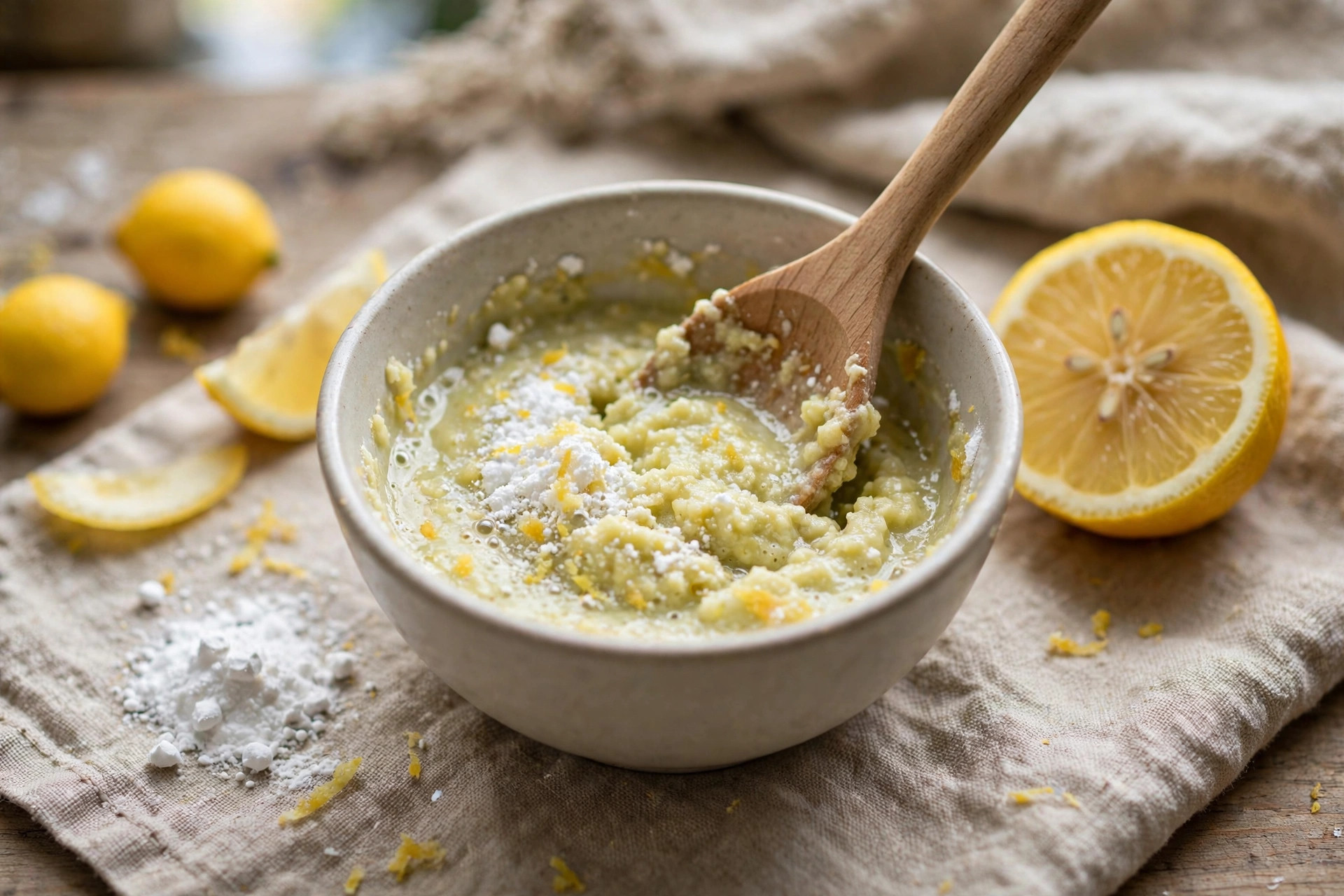
For greasy stovetops and cabinet fronts, use warm water with a good squirt of dish soap, applied with a cloth wrung almost dry. For the sink itself, sprinkle baking soda over the wet surface, scrub with a half lemon — the combination fizzes gently, lifts stains, and leaves the sink smelling fresh — then rinse and dry for a real shine. A paste of baking soda and a little water also lifts coffee and tea stains from mugs and counters without scratching.
Bathroom, Floors, and Laundry Boosters
Bathrooms are where homemade cleaners shine brightest. For soap scum on tubs and shower doors, warm undiluted white vinegar in a spray bottle (a few seconds in a bowl of hot water does it), spray, wait fifteen minutes, then scrub with a baking soda paste and rinse. The acid softens the scum so the gentle abrasive can sweep it away. A squeegee after showers keeps the problem from rebuilding.
For floors, hot water with a teaspoon of dish soap cleans most tile, laminate, and sealed wood — go easy on the soap, because residue attracts dirt, and skip vinegar on natural stone, where acid dulls the finish. In the laundry room, half a cup of baking soda in the wash deodorizes towels and gym clothes, while a cup of white vinegar in the rinse cycle softens fabrics and clears detergent buildup.
Build a Simple Weekly Rhythm Around Your Bottles
Homemade cleaners work best inside a light weekly rhythm. Keep the all-purpose spray in the kitchen, the glass cleaner where mirrors live, and a small caddy — cloths, baking soda, a lemon — that travels with you. Move room by room: spray, let the cleaner sit a minute to work, then wipe. That short pause is the difference between pushing dirt around and actually lifting it.
What Natural Cleaners Cannot Do — and the Safety Rules
Honesty matters: vinegar and baking soda are excellent everyday cleaners, but they are not hospital-grade disinfectants. For raw meat juices, illness in the house, or bathroom deep cleans, use a proper disinfectant as directed, or a seventy percent alcohol solution, and let it sit for the full contact time. Use natural cleaners for the daily ninety percent, and the stronger tools for the moments that genuinely need them.
Three safety rules keep homemade cleaning genuinely safe:
- Never mix vinegar (or any acid) with bleach. The combination creates toxic chlorine gas. This is the one truly dangerous mistake in DIY cleaning.
- Do not combine vinegar and hydrogen peroxide in the same bottle; used one after the other on a surface they are fine, mixed together they form an irritating acid.
- Label every bottle with its contents and the date, and store homemade products like any cleaner — away from children and pets. Make fresh batches monthly for best strength.
Note too that vinegar and baking soda mixed together mostly cancel out into salty water after the fizz, so use them sequentially — acid first to dissolve, soda paste to scrub — rather than as one magic potion.
Frequently Asked Questions
Do homemade cleaners really kill germs?
Some ingredients help: rubbing alcohol at around seventy percent is a genuine disinfectant, and hot soapy water removes most everyday bacteria by lifting them off surfaces so they rinse away. Vinegar reduces some bacteria but is not a registered disinfectant. For illness, raw meat, or bathrooms that need true disinfecting, use a proper product as well — natural for daily cleaning, disinfectant for the serious jobs.
Will vinegar damage my surfaces?
On most counters, sinks, glass, and sealed tile, diluted vinegar is perfectly safe. Avoid it on natural stone (marble, granite, travertine), where acid can etch and dull the surface, and do not soak hardwood floors with it. When in doubt, test a hidden spot first and use the soapy all-purpose cleaner on delicate surfaces instead.
How long do homemade cleaners keep?
Plan on about a month for water-based mixes. They contain no preservatives, so strength fades and bottles can grow cloudy over time. Small fresh batches are better than big old ones — another reason to label with the mixing date. Dry ingredients like baking soda keep indefinitely in a sealed jar.
Is it actually cheaper than buying cleaners?
Yes, dramatically. A spray bottle of the all-purpose or glass cleaner costs a small fraction of a store-bought equivalent, because vinegar, baking soda, and dish soap are sold cheaply in bulk and used by the spoonful. You also finish with fewer half-empty bottles under the sink — which, for a cleaning and organization fan, is a reward of its own.
Natural cleaning is not about being perfect or purist. It is about a caddy of simple, honest products that handle your everyday messes for pennies, smell like real lemons, and leave your home clean without a chemical fog. Mix your first two bottles this week — you will be surprised how rarely you reach for anything else.