Decluttering sounds simple until you open the first closet and freeze. Most homes do not need more storage — they need fewer decisions hiding in piles. The reason whole-house decluttering overwhelms people is that they try to do it all at once, in no particular order, with no plan for where things should go. This guide fixes all three problems: one room at a time, one small category at a time, with a clear finish line for each space.
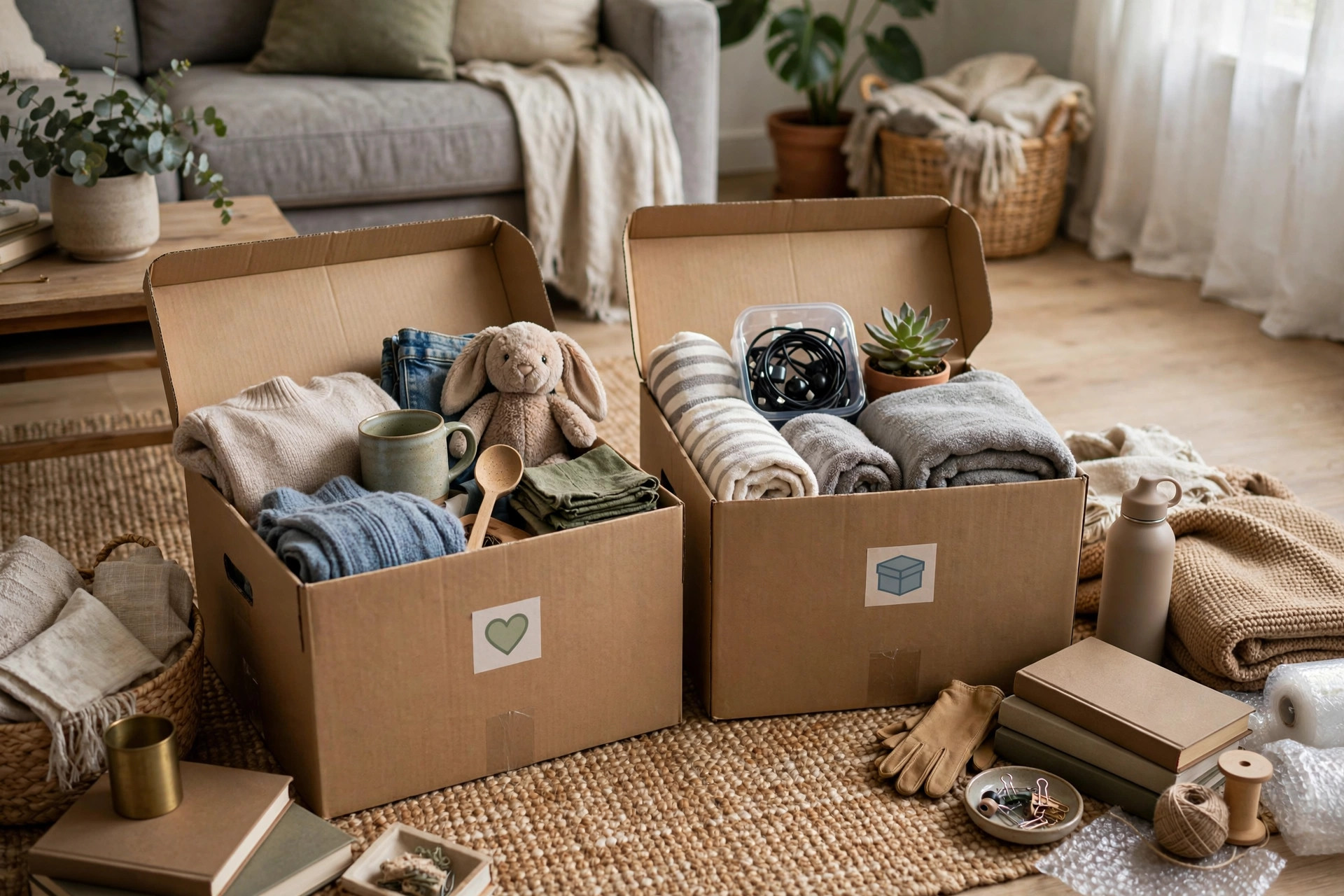
Work through the rooms in the order below — easiest wins first, emotional items last. Keep four boxes or bags by your side in every room: donate, relocate, recycle/trash, and decide later (keep that last one small). When a box fills, deal with it immediately. That steady visible progress is what carries you to the end.
Start With the Bathroom and Kitchen Junk Spots
Begin where emotion is lowest and results are fastest. In the bathroom, pull everything out of the medicine cabinet and under the sink. Toss expired medicines (return them to a pharmacy take-back if you can), dried-out cosmetics, and the hotel bottles nobody will ever use. Group what remains by job — daily, weekly, first aid — and give each group one container. Most bathroom clutter is simply products with no assigned home.
Then take the kitchen’s worst offender: the junk drawer and the utensil crock. Test every utensil honestly — if you have not used it in a year, or you own three of it, it goes. Check food storage containers and keep only ones with matching lids. These two small spaces take under an hour combined, and the quick win builds real momentum for the bigger rooms ahead.
The Living Room: Edit Surfaces and Media
Living rooms collect paper, remotes, cables, toys, and decor that quietly stopped meaning anything. Start with flat surfaces: coffee table, side tables, shelves, mantel. Remove everything, clean the surface, then return only what is useful or genuinely loved. The seventy-percent rule helps here — a surface that is mostly empty reads as calm, and calm is the whole point.
Next, work through books, magazines, and media. Keep books you will reread or reference; donate the rest to free up shelf space that makes the keepers look intentional. Tame cables with a clip or a box with holes, and give remotes and chargers one shared home, ideally a small tray or basket that always lives in the same place. Finish with decor: group objects in twos and threes, and let some shelves hold a single beautiful thing instead of a crowd.
Bedrooms and Closets: The Honest Edit
Bedrooms should be the calmest rooms in the house, yet they often become storage for everything without a home. Begin with the surfaces again — nightstands and dressers hold only what serves sleep and dressing. Then face the closet, which rewards honesty more than any other space. Take clothes out by category: all tops, then all bottoms, then shoes. Try on anything you are unsure about, because “might fit again” piles are where closet space goes to die.
The Simple Closet Rules
- Keep what fits, flatters, and works with at least two other pieces you own.
- Donate what is good but not for you — someone else will love it.
- Recycle worn-out basics; many textile programs accept them.
- Store only truly seasonal items, in one labeled box.
When everything goes back, hang by category and color. The visual order makes getting dressed easier and — just as importantly — makes future clutter obvious at a glance.
Kids’ Rooms, Entryways, and the Paper Problem
Children’s spaces declutter fastest with rotation. Box up half the toys and swap them monthly; kids play more deeply with fewer choices, and the room stays manageable. Broken toys, dried markers, and outgrown puzzles can go without ceremony. For books, keep a small shelf of current favorites and pass along the outgrown ones while they still have life in them.
Entryways need systems more than space: one hook per person, a small basket or tray for keys and mail, and a strict shoes-in-use limit. Paper is the final boss of every home, so give it one in-tray and a weekly ten-minute sort: act, file, or recycle. Going paperless on bills and statements quietly removes the biggest refill source of all.
The Storage Zones: Garage, Attic, and Forgotten Corners
Save storage areas for last, when your decision muscles are strong and your donation pile proves you can let go. Work in zones — one shelf, one corner — and be ruthless with the categories that accumulate here: empty boxes for products you no longer own, paint for walls you have repainted, sports gear for hobbies paused years ago, and the classic “might need it someday” bin.
Label what truly stays and stack by frequency: seasonal and rarely used items up high or deep, everyday items reachable. If something has not been touched in a year and is not seasonal, sentimental, or safety equipment, it is a strong candidate to leave. Sentimental items deserve one dedicated box with a hard size limit — when the box is full, something must earn its place by replacing something else. Memories live in your mind, not in cubic feet.
Frequently Asked Questions
How long does a whole-home declutter take?
For most homes, two to four weekends of short sessions, or about thirty minutes a day for two weeks. Time matters less than finishing rooms completely — a fully finished room motivates you, while five half-done rooms drain you. Start small, finish visibly, and let momentum do the heavy lifting.
What should I do with things I feel guilty about throwing away?
Guilt usually means the item was a gift or cost real money. Remember that the money is already spent and the gift already did its job of showing love. Donating passes the item to someone who will use it, which is a far better ending than a decade in a box. Take a photo if the memory matters — photos take no shelf space.
Where do I start when every room is equally bad?
Start with the room you use first each morning — usually the bathroom — then the kitchen junk spots, then your bedroom. Early wins in high-use rooms change how the whole day feels and prove the process works before you tackle storage areas.
How do I keep the clutter from coming back?
Two habits do almost all of it: a home for everything, and one-in, one-out for clothes, books, toys, and gadgets. Add a monthly fifteen-minute sweep of your worst hotspot. Clutter returns slowly, so a small regular effort always beats another big purge.
Decluttering is not about owning nothing — it is about keeping only what serves your life as it is now. Room by room, category by category, you will trade crowded shelves and mystery boxes for rooms that breathe. Start with one drawer today; the calm spreads faster than you expect.