There is a special kind of happiness in picking a tomato you grew yourself. It tastes better than anything from a shop — not just because it is fresher, but because you know every sunny day and every watering that went into it. If you have always wanted to grow your own vegetables but assumed you needed acres of land or years of experience, this guide is for you. You need neither. A small patch of ground, a few pots, or even a single raised bed is enough to start.
Vegetable gardening rewards beginners quickly, because so many vegetables grow fast and forgive mistakes. This guide walks you through the whole first season in simple order: choosing your spot, picking easy crops, planting, and the light weekly care that keeps everything thriving. Start small, learn as you go, and by harvest time you will wonder why you waited so long.
Start Small and Set Yourself Up to Succeed
The most common beginner mistake is planting too much. A huge plot feels exciting in spring and overwhelming by July, when the weeds are tall and the watering feels endless. Start with a patch about three metres by three metres, one raised bed, or four to six large pots. A small garden you enjoy tending will always out-produce a big garden you avoid.
Think of your first year as a delicious experiment rather than a test you can fail. Choose a handful of vegetables your household actually eats — there is no glory in a bumper crop of radishes nobody wants. Gardens are built in seasons, not weekends.
Choose the Right Spot: Sun, Water, and Soil
Vegetables are sun lovers. Most need at least six hours of direct sunlight a day, and fruiting crops like tomatoes, peppers, and cucumbers are happiest with eight or more. Watch your garden through a day before planting and pick the sunniest spot you have. Leafy greens such as lettuce and spinach are the exception — they tolerate partial shade and even prefer it in hot summers.
Give Your Plants a Drinkable Neighborhood
Place your garden where a hose or watering can can easily reach. Hauling water across a long yard is the chore that quietly kills gardens in August. Soil matters too: vegetables want loose, dark, crumbly soil that drains well. If your soil is heavy clay or very sandy, do not despair — mix in generous amounts of compost before planting. Compost improves almost every soil problem at once, feeding microbes, holding moisture, and loosening texture. A simple soil test from a garden center can tell you if you need lime or fertilizer, but compost is never the wrong answer.
Pick Beginner-Friendly Vegetables
Some vegetables practically grow themselves, and they are the perfect first cast for your garden. Zucchini is famously generous — one or two plants will keep a family supplied. Cherry tomatoes ripen over a long season and shrug off imperfect weather better than large slicing types. Green beans produce handful after handful from a small row or a pot with a simple trellis.
- Lettuce and salad greens — ready in weeks, and you can snip outer leaves while the plant keeps growing.
- Radishes — the fastest reward in gardening, often ready in under a month.
- Cucumbers — happy climbing a fence or trellis, saving ground space.
- Herbs like basil, parsley, and mint — small plants, huge flavor, and most are very forgiving (grow mint in a pot, as it loves to spread).
- Carrots — a little slower, but deeply satisfying to pull from loose, sandy soil.
Check the seed packet or plant tag for your climate’s planting dates. Warm-season crops like tomatoes and peppers go out only after the last frost, while peas, lettuce, and radishes actually prefer cool spring soil.
Planting Day: Seeds, Seedlings, and Spacing
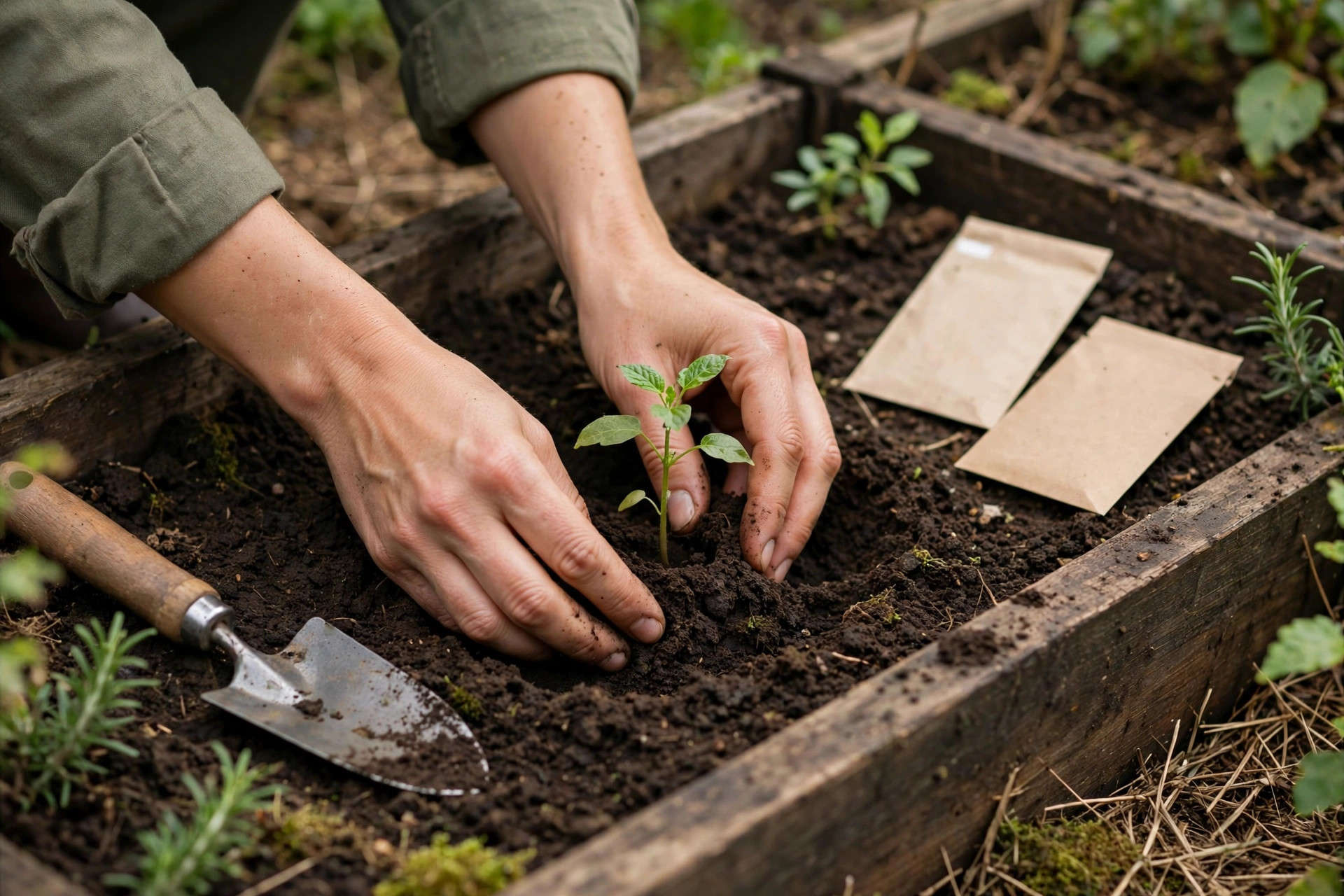
Seeds are cheap and satisfying; seedlings (young plants from a nursery) are faster and easier. Beginners often do best with a mix: sow beans, peas, carrots, and lettuce directly in the ground, and buy tomato, pepper, and herb plants as seedlings. Plant seeds at a depth about twice their width — tiny seeds barely covered, big bean seeds a few centimetres down.
Spacing is where new gardeners most often go wrong. Those tiny seedlings become big plants, so trust the packet distances even when the bed looks empty at first. Crowded plants compete for water and light and invite disease. Water the soil gently after planting, and add a layer of mulch — straw, shredded leaves, or wood chips — around plants once they are established. Mulch holds moisture, cools roots, and keeps most weeds from ever starting.
The Simple Care Routine: Water, Feed, Weed
Gardens thrive on small, regular attention rather than weekend heroics. Water deeply two or three times a week instead of a light sprinkle every day — deep watering encourages deep roots. Water at the soil level in the morning when you can; wet leaves in the evening invite fungal problems. During heat waves, pots may need water daily.
Feed lightly. A dose of balanced vegetable fertilizer or a top-dressing of compost mid-season keeps heavy feeders like tomatoes and zucchini producing. Pull weeds while they are small — ten relaxed minutes twice a week beats an afternoon of battle later. Finally, pick vegetables often and young: zucchini, beans, and cucumbers produce more the more you harvest, and overripe fruit left on the plant tells it to stop.
Frequently Asked Questions
How much space do I really need to start?
Far less than you think. One raised bed of about 1.2 by 2.4 metres, or four to six large pots on a sunny patio, can grow tomatoes, herbs, lettuce, beans, and a zucchini plant. Start there, learn your space, and expand next season if you catch the gardening bug — most people do.
When should I start planting?
It depends on the crop and your climate. Cool-season vegetables like peas, lettuce, and radishes can go in a few weeks before your last spring frost. Warm-season favorites like tomatoes, peppers, and beans must wait until all frost danger has passed and nights are mild. Seed packets and local garden centers give dates tailored to your area.
How often should I water my vegetable garden?
Aim for deep watering two or three times a week, giving the soil a thorough soak so moisture reaches the roots. Pots dry out faster and may need daily water in summer. The finger test never lies: if the soil is dry a couple of centimetres down, it is time to water.
What if pests eat my plants?
Some nibbling is normal and harmless. Encourage helpful insects by planting a few flowers nearby, cover delicate seedlings with light garden fabric, and pick off larger pests by hand. Healthy, well-watered plants in good soil resist most problems on their own, so focus first on sun, water, and spacing.
Your first vegetable garden does not need to be perfect — it needs to be started. Pick a sunny spot, plant a few things you love to eat, water them kindly, and pay attention. By midsummer you will be eating salads you grew yourself.