A room with one pattern is a room making one small statement. A room where patterns and textures mix well feels collected, personal, and alive, the kind of space that looks like it came together over years of good choices. Many people avoid mixing because they fear the result will look busy or wrong. Designers do not have a special gene for this. They follow a few learnable rules about scale, color, and rest.
The encouraging part is that you probably already own everything you need. Mixing is mostly about rearranging what you have: pairing the striped cushion with the floral one, moving the woven throw next to the smooth leather chair, and letting quiet surfaces give busy ones room to breathe.
Build Your Mix Around One Color Story
Patterns can be as different as they like if they share colors. A navy floral, a cream and navy stripe, and a small rust-colored geometric print will happily live together because the palette holds them in one family. Before mixing anything, choose two or three main colors plus a neutral, and let every pattern you use draw from that same pot.
Start with the pattern you love most, often the boldest one, and pull your colors from it. If a rug has deep green, warm cream, and a touch of terracotta, those become the rules. Every other pattern in the room should contain at least one of those colors. This single habit prevents most mixing disasters before they start.
Keep One Dominant Pattern
Every good mix has a leader. Let one large pattern take the main role: the rug, the curtains, or a statement chair. Everything else plays support at smaller sizes and quieter energy. When two bold patterns compete at the same strength, the room feels loud. One hero, several friends, never two heroes arguing.
Vary the Scale: Large, Medium, Small
Scale is the rule designers lean on most. Patterns of the same size fight each other, even if the colors match. Patterns of clearly different sizes get along beautifully. Aim for one large-scale pattern, one medium, and one small in each room or seating group.
Picture a sofa corner: a large botanical print on the curtains, a medium stripe on one cushion, and a tiny dotted or woven pattern on another. Your eye reads them as a rhythm instead of a clash. If everything in a room feels busy, check the scales first. Usually three medium patterns are colliding, and swapping one for a small print or a solid calms the whole arrangement.
Solids Are Part of the Pattern Plan
Solids are not a failure of nerve. They are the rest notes that let patterns sing. For every two or three patterned pieces, give the eye a solid place to land: a plain sofa under patterned cushions, a solid throw over a patterned chair.
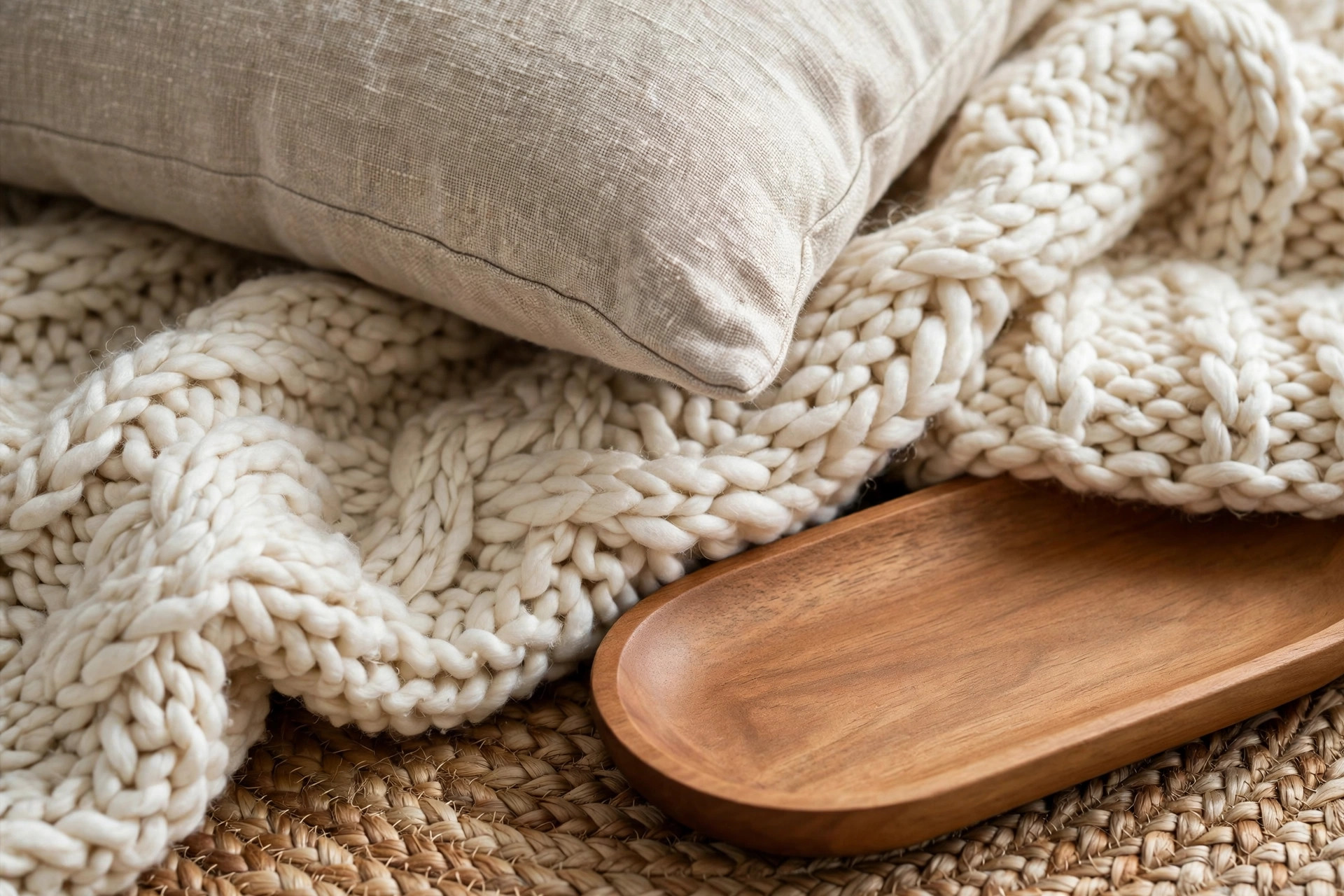
Mix Textures Like You Mean It
Texture is pattern’s quieter partner, and it matters even more in calm, neutral rooms. A beige room with only flat surfaces looks like a showroom. The same room with nubby linen, smooth leather, rough wood, soft wool, and a woven basket feels rich without a single bright color. If your room feels flat and boring but you cannot name why, texture is the likely answer.
Aim for contrast within arm’s reach. Pair smooth with rough, shiny with matte, soft with hard. A velvet cushion on a linen sofa, a chunky knit throw over a leather chair, a glossy ceramic lamp on a raw wood table. Each contrast makes both materials look better, the same way patterns do.
Use the Three-Texture Minimum
A simple floor for any room: at least three clearly different textures in the main seating area. Natural materials are the easiest way to get there, since wood, stone, wool, cotton, and plants all bring texture for free. One living plant counts double, bringing both texture and movement.
Repeat Each Pattern at Least Twice
A pattern that appears only once looks like an accident. A pattern that appears twice looks like a decision. This does not mean matching sets. It means echoing: the stripe on a cushion reappears on a throw across the room, or the curtain floral shows up smaller in a cushion.
The same rule applies to texture. One rattan chair is charming; a rattan chair plus a rattan basket or pendant light is a theme. Repetition is the cheapest form of design confidence, and it works even when you are mixing pieces from different decades and budgets.
Spread the Mix Around the Room
Do not stack all your patterns on the sofa and leave the rest of the room bare. Distribute them: pattern at the window, pattern on the floor, pattern in the seating, so your eye travels. Balance, not symmetry, is the goal.
Test Before You Commit
Mixing is easy to trial because most of it is soft and movable. Gather every cushion, throw, and small textile you own into one pile, then rebuild the room one combination at a time. Take phone photos of each version. Photos flatten a room into pattern and color, which makes clashes and heroes obvious in a way your eye misses standing inside it.
Live with a new mix for two days before judging. Many great combinations feel strange for an evening and perfect by the weekend. Start with cushions and throws, which are cheap to change, before committing to curtains or a rug.
Frequently Asked Questions
How many patterns are too many in one room?
Three patterns per seating area is a comfortable target: one large, one medium, one small, all sharing colors. Bigger rooms can carry a fourth. If a room feels busy, the problem is usually competing scales or colors rather than the count itself, so adjust those before removing patterns you love.
Can I mix florals with stripes and checks?
Yes, this is one of the classic combinations. Florals are organic and curvy, stripes and checks are straight and orderly, so they balance each other naturally. Keep them in one color family, make the floral the large-scale hero, and let the stripe or check play a smaller supporting role.
What if my room is small? Will patterns overwhelm it?
Small rooms handle patterns well when one pattern is large. A big print actually makes a small room feel bigger because it gives the eye fewer, bolder shapes to read. Keep the palette tight, include plenty of solids for rest, and repeat each pattern once so the mix looks intentional.
How do I add texture to a room on a budget?
Start with textiles you may already own: a chunky throw, linen-look cushions, a woven basket for blankets or plants. Natural materials from discount and secondhand shops, like wood trays and ceramic vases, add texture cheaply. One real plant adds more life per dollar than almost anything else.
Mixing patterns and textures is not about bravery. It is about a shared color story, three different scales, solids for rest, and every pattern repeated once. Follow those few rules and your rooms stop looking assembled from a catalog and start looking like you: layered, comfortable, and quietly confident.