Lighting is the hardest-working design tool in any home, and the most overlooked. The same room can feel cold and flat at noon, then warm and inviting in the evening, without a single piece of furniture moving. The difference is almost always the light: where it comes from, how warm it is, and whether it was planned in layers.
The good news is that you do not need an electrician or a big budget to fix bad lighting. A few well-chosen lamps, the right bulbs, and a simple plan for each room can change how your whole home feels after dark, and even how it looks during the day.
Think in Three Layers of Light
Good rooms never rely on one kind of light. They combine three layers. Ambient light is the general glow that lets you move around safely: ceiling lights, recessed lights, or a bright central fixture. Task light is focused light for doing things: a reading lamp, under-cabinet kitchen strips, a desk lamp. Accent light is the pretty layer: picture lights, candles, a small lamp on a shelf, light that exists to create mood and highlight what you love.
Most homes have plenty of the first layer and almost none of the other two. That is why rooms feel like waiting rooms. Walk into any space in your home and count the layers. If the answer is one, you have found the problem, and it is an easy one to fix.
The Five-to-Seven Rule
Designers often aim for five to seven light sources in a living room, counting lamps, sconces, candles, and fixtures together. You are not buying seven chandeliers. You are spreading light around the room at different heights so no corner goes dark and shadowy.
Choose the Right Bulb Before the Right Lamp
A beautiful lamp with the wrong bulb still gives ugly light. Two numbers matter. The first is color temperature, measured in kelvins. For homes, stay between 2700K and 3000K for warm, welcoming light in living rooms and bedrooms. Cooler 4000K light suits laundry rooms and some kitchens, and anything above 5000K will make your home feel like a dental office.
The second number is brightness, measured in lumens. A reading lamp wants roughly 450 to 800 lumens, a kitchen worktop more, a bedside lamp less. If a room feels dim, the fix is often stronger bulbs in the lamps you already own, not new fixtures. And whenever you can, choose bulbs that dim. A dimmer gives one lamp several jobs: bright for cleaning, low for movie night.
Match Every Bulb in the Room
Mixed color temperatures are a silent mood killer. One warm bulb and one cool bulb in the same room make both look wrong. Pick one temperature per room and use it everywhere, lamps and ceiling included. Consistency is what makes light feel designed instead of accidental.
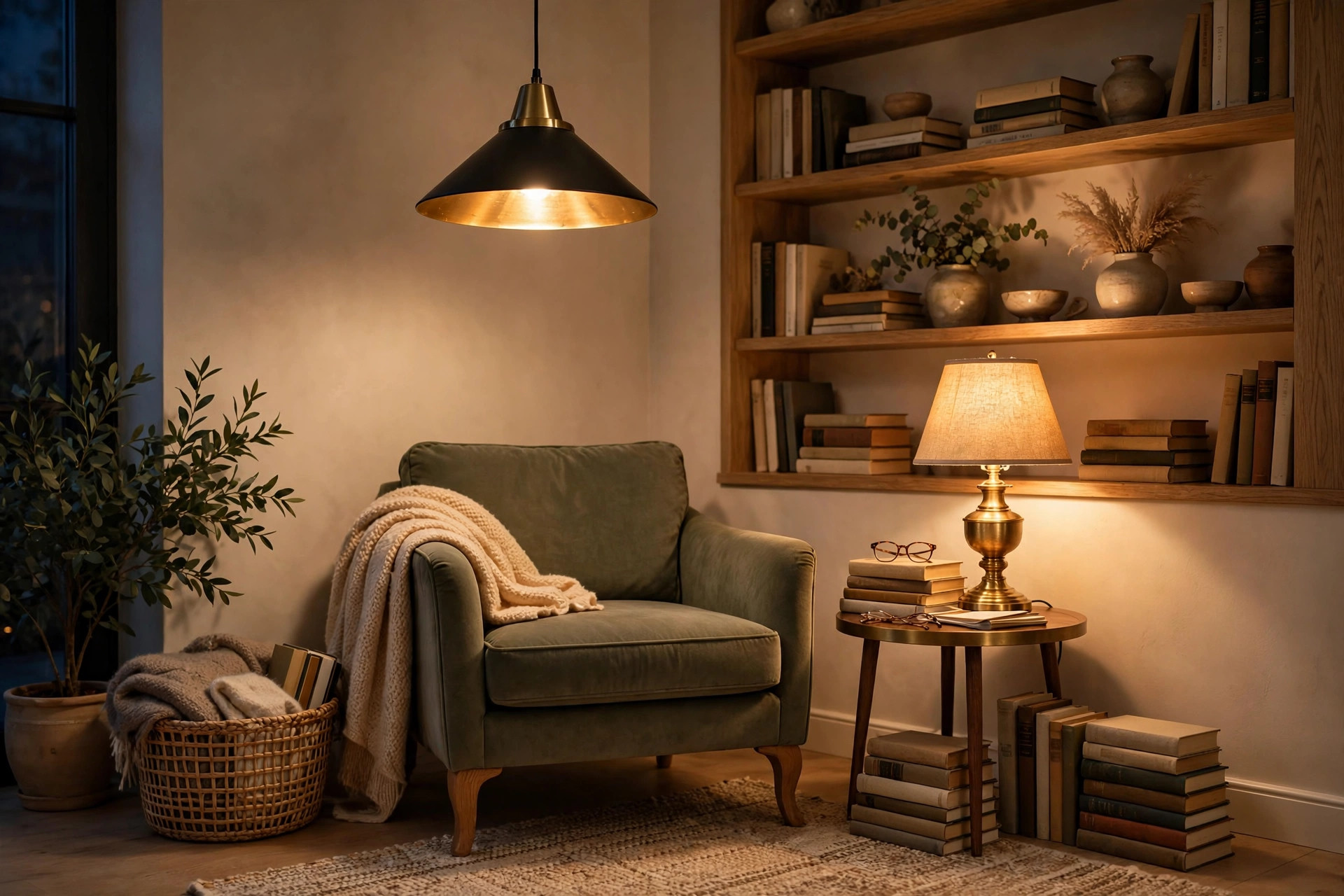
Place Lamps Where Life Happens
A lamp earns its keep by lighting an activity or softening a dark corner. Put a floor lamp beside the chair where you actually read. Table lamps belong at about eye level when seated, so the light lands on your book, not in your face.
Dark corners deserve attention too. A small lamp on a bookcase, a low light in a hallway, or an uplight behind a plant makes a room feel bigger because your eye can travel to its edges. Rooms shrink when the corners go black. Light the perimeter and the whole space relaxes.
Light Your Walls and Art, Not Just the Floor
Light aimed at walls makes a room feel taller and richer than light aimed straight down. Picture lights over art and lamps near walls bounce brightness back into the room. Lighting one loved piece of art can do more than a new rug.
Give Every Room Its Own Lighting Plan
In the living room, combine a soft ambient source with lamps at both ends of the sofa and one accent light for art or shelves. In the kitchen, under-cabinet lighting is the single best upgrade most homes can make: it removes shadows exactly where you chop and cook, and it looks beautiful at night on its own. Bedrooms want warmth and control: bedside lamps you can read by, on separate switches, so one person can sleep while the other finishes a chapter.
Bathrooms need honesty at the mirror. Light from both sides of the face, at eye level, avoids the horror-movie shadows of a single overhead light. Hallways and stairs deserve a low guiding glow, especially for nighttime trips. When each room’s lighting matches what you actually do there, the whole house starts working better.
Do Not Forget Daylight
Artificial light gets the attention, but daylight is half the plan. Keep window treatments that open fully so rooms can be bright when you want them to be. Hang mirrors opposite windows to double the light you already have, and place desks and reading chairs to borrow daylight first, with lamps as backup.
Control Is the Final Layer
The best lighting in the world still fails if it is annoying to use. Group lights on a few simple controls: dimmers for overhead lights, lamp switches you can reach without standing up, and smart bulbs where they genuinely help. The goal is three moods per main room: bright for tasks, medium for everyday living, low for evenings.
Warm consistency matters here too. If you install smart bulbs in one lamp only, the mixed colors undo the effect, so commit to the main lights in that room. A room that can shift from homework mode to dinner mode in five seconds will be used and loved more.
Frequently Asked Questions
How many lamps does a living room actually need?
Most living rooms feel right with three to five lamps plus any ceiling light, spread at different heights and in different corners. Count all sources together, including candles and sconces. If people squint to read or one half of the room is always gloomy, add a lamp where the activity or the darkness is.
What color temperature is best for a cozy home?
Choose 2700K to 3000K bulbs for living rooms, bedrooms, and dining areas. This range gives the warm glow of late-afternoon sun. Reserve cooler 4000K light for workshops or laundry rooms. Keep every bulb in a room the same temperature so the light feels calm and consistent.
Are dimmers worth installing?
Yes, dimmers are one of the cheapest upgrades with the biggest effect. A dimmer turns one harsh overhead light into task light, everyday light, and evening mood light. Just make sure your bulbs are labeled dimmable.
How can I improve lighting in a rental without rewiring?
Renters have plenty of options: plug-in lamps, battery picture lights, adhesive under-cabinet strips, and smart bulbs in existing fixtures change everything without touching wires. Swapping cool bulbs for warm 2700K ones costs little and transforms a room overnight.
Great lighting is rarely about a statement fixture. It is layers, warm consistent bulbs, lamps placed where life happens, and simple control over the mood. Fix those four things room by room, and your home will feel better every single day.