A small room is not a problem to apologize for — it is a puzzle, and a genuinely fun one. Some of the most charming, comfortable homes in the world are tiny city apartments where every piece earns its place. The difference between a small room that feels cramped and one that feels cozy and bright is rarely the square footage. It is a handful of smart decisions about furniture, light, color, and clutter.
Whether you are decorating a compact living room, a narrow bedroom, a studio, or a small home office, the ideas below work together to stretch your space visually and practically. None of them require knocking down walls, and most cost very little.
Measure First and Choose Furniture That Works Twice
Small-space decorating starts with a tape measure, not a shopping trip. Measure your room, then measure the furniture you want — including how far drawers and doors open — before anything comes home. Oversized furniture is the number one space killer: a giant sofa in a small room does not look luxurious, it looks like a storage unit. Choose pieces scaled to the room, and where possible, pick furniture that does two jobs. A storage ottoman is a footrest, extra seating, and a hiding place for blankets. A drop-leaf table is a desk by day and a dinner table for guests.
Pieces That Earn Their Keep
Look for nesting side tables that tuck together, a slim console that works as both entryway table and desk, and bookcases that are tall rather than wide. Furniture with legs — sofas, chairs, and beds raised a few inches off the floor — is a small-space secret weapon, because seeing the floor continue underneath makes the room read as larger.
Use Light, Color, and Mirrors to Stretch the Walls
Light colors reflect light, and light is what makes a room feel open. You do not have to paint everything white — in fact, soft warm neutrals, pale sage, powder blue, and blush all keep a small room feeling airy while giving it personality. The trick is continuity: when walls, large furniture, and curtains live in the same light color family, the eye stops noticing where one thing ends and another begins, and the room feels bigger. Save dark and bold colors for small accents — a cushion, a lamp, a piece of art — where they add depth without closing the space in.
Then add a mirror, the oldest small-space trick in the book because it genuinely works. A large mirror opposite or beside a window doubles your natural light and creates the illusion of another room beyond the wall. No big mirror? Group several small ones, or lean an oversized mirror against the wall behind a chair. Pair mirrors with good lighting at multiple levels — a ceiling light alone casts shadows that shrink a room, while lamps make corners glow and disappear.
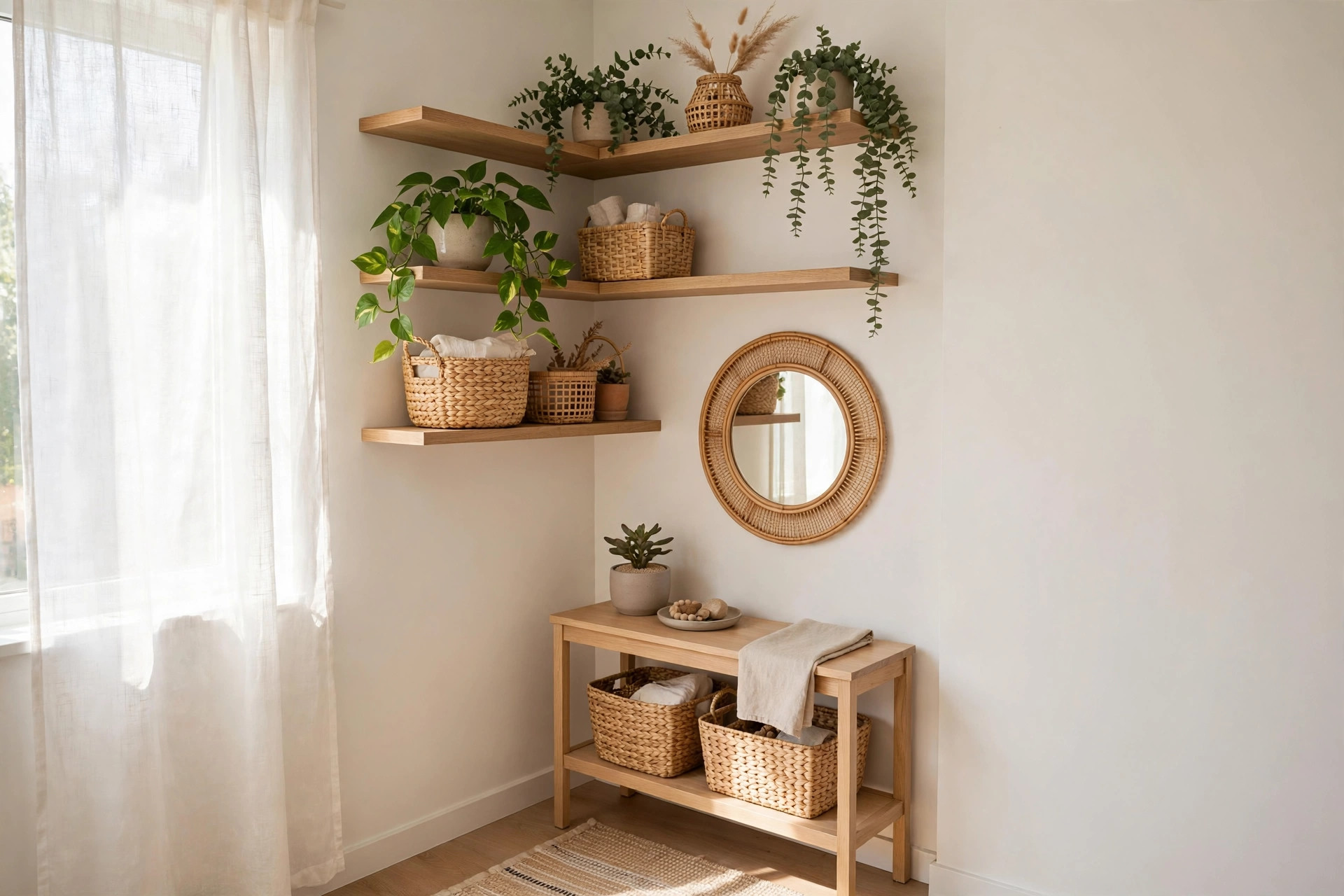
Go Vertical: Your Walls Are Free Space
When floor space runs out, look up. Tall, narrow bookcases draw the eye upward and make ceilings feel higher, while using storage you would otherwise lose. Floating shelves above a desk, sofa, or doorway hold books, plants, and pretty storage boxes without touching the floor at all. Hang curtains as close to the ceiling as you can and let them fall to the floor — this single change makes windows look grander and walls taller in every small room.
Vertical thinking applies to decor, too. A gallery wall that climbs high, a tall plant in a corner, or artwork hung slightly higher than usual all pull attention upward. Just keep the lower two-thirds of your walls relatively calm, so the room feels ordered rather than busy.
Create Zones and Keep Pathways Clear
Counterintuitively, dividing a small room into zones makes it feel bigger, not smaller — because a room with a purpose reads as well-planned. In a studio, use a rug to define the living area, a low bookcase or curtain to suggest the sleeping area, and a small table to mark where you eat and work. Suddenly one box of a room feels like three.
Whatever your layout, protect your pathways. You should be able to walk through the room without turning sideways or stepping around furniture. Float the sofa a few inches from the wall rather than jamming it against it, choose round coffee tables that are kinder to shins, and keep the center of the room as open as you can. When movement is easy, the room feels generous.
Tame Clutter With Hidden Storage and Ruthless Editing
Nothing shrinks a room faster than clutter. In a large space, mess spreads out; in a small one, every object is on display. The fix is twofold: hide what you can, and honestly edit what you cannot. Closed storage is your best friend — cabinets with doors, lidded baskets, storage benches, and boxes that slide under the bed.
Adopt a one-in, one-out habit: a new throw means an old one gets donated. Keep everyday surfaces about seventy percent clear — a lamp, one tray, and a small plant is plenty for a side table. And give everything a home. When keys, chargers, mail, and remotes have assigned spots, a small room resets to calm in five minutes — and calm is what makes small feel serene instead of squeezed.
Frequently Asked Questions
What is the best color for a small room?
Warm, light colors work best: soft white, warm beige, pale gray, light sage, or powder blue. The exact shade matters less than keeping walls, big furniture, and window coverings in the same light family so the space feels continuous. You can absolutely use a dark accent wall or bold art — just let light tones do most of the work.
How do I make a small studio apartment feel like separate rooms?
Create zones. Anchor the living area with a rug, place a low bookcase or open shelving unit as a gentle divider, and give the sleeping area its own lamp and textiles. Consistent colors across the whole studio keep it cohesive, while the rugs, lighting, and furniture groupings tell your brain where one space ends and another begins.
What is the biggest mistake people make in small rooms?
Buying furniture that is too big, then pushing it all against the walls. The result is an empty middle and cramped edges. Measure first, choose slightly smaller pieces raised on legs, and group them into a conversation or work area — the room will instantly feel larger and more inviting.
Where should I hang a mirror in a small room?
Opposite or adjacent to a window is ideal, so it reflects natural light and the view back into the room. Above a console, mantel, or sofa also works well. Choose the largest mirror your wall and budget allow — in small spaces, one generous mirror does far more than several tiny ones.
A bigger-feeling home is not about more space — it is about using the space you have with intention. Measure carefully, let in light, build upward, and keep only what earns its place. Do that, and your small room will feel like exactly enough.